Short answer: you need Matrixyl 3000 delivered at an effective level — around 3% — and used consistently. That's exactly how Asterwood's Matrixyl 3000 + Argireline Serum is built: 3% Matrixyl 3000, plus 2% Argireline and 1% Hyaluronic Acid, applied as just 3–5 drops morning and/or night. Give it about 4 to 8 weeks of daily use to see firmer, smoother-looking skin — you don't need more than that, and piling on extra won't make it work faster. Below: how much to apply, how long it takes, and how to tell if a Matrixyl serum is strong enough.
How much to apply — a little goes a long way
Per use, you need surprisingly little: 3 to 5 drops on clean, dry skin — enough to lightly cover your face and neck. Press it in gently, follow with a moisturizer, and add SPF in the morning. More than that won't speed anything up, because peptides work at the concentration they're formulated for, not by the extra drop. So a few drops twice a day is genuinely all you need — which also means a single bottle stretches across a lot of mornings and nights.
How long until you've used "enough" to see results
With a peptide serum, "how much do you need" is really a question about consistency over time, not the size of any one dose. Here's a realistic timeline with daily use:
- Right away: skin feels smoother and more hydrated, thanks to the 1% Hyaluronic Acid base.
- Around 1 week: surface texture looks softer and the complexion more supple.
- 2–4 weeks: expression lines start to visibly soften — that's the 2% Argireline at work.
- 4–8 weeks: skin looks firmer and more resilient, with fine lines visibly diminished.
- 12+ weeks: the fullest visible benefit, with continued daily use.
The takeaway: the "dose" that matters most is showing up every day.
Results may vary by skin type, age, sun exposure, and consistency of use.
Why ~3% is the level that matters
Matrixyl 3000 is a branded two-peptide complex from Sederma, used within a formulator range — and roughly 3% sits at the effective, commonly used end of that range. Plenty of brands never tell you where they land; Asterwood does: 3% Matrixyl 3000, alongside 2% Argireline and 1% Hyaluronic Acid. So "how much do you need" and "what does the label disclose" have the same answer here.
Why peptide blends don't work like single-active percentages
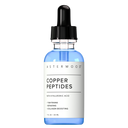
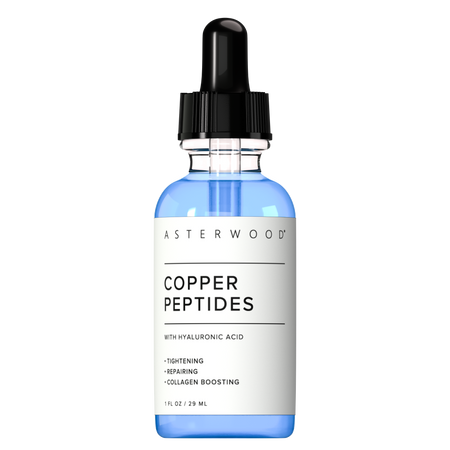
Compare this to Asterwood's Copper Peptides Serum, which lists 0.10% GHK-Cu — a single, well-studied molecule where concentration is a directly comparable number. Matrixyl 3000 is a complex rather than a single molecule, so its 3% describes the branded blend — a different kind of number than a single-molecule 0.10%, but still a disclosed one you can hold Asterwood to.
How to tell if a Matrixyl serum is actually strong
- It discloses its concentration — like Asterwood's 3% — instead of leaving you guessing.
- Matrixyl 3000 sits early in the ingredient list, not buried near the bottom.
- The formula isn't padded out with a long list of filler ingredients (Asterwood's is just 8 ingredients).
- It's the officially licensed, Sederma-manufactured Matrixyl 3000 — not a look-alike.
- It also supports hydration, since peptides perform better on well-hydrated skin (here, a 1% Hyaluronic Acid base).
What "clinically studied" means here
It usually refers to studies on the ingredient itself rather than the exact bottle — a normal, honest distinction, and one more reason a brand that discloses its concentration (like Asterwood's 3%) is easier to trust.
This article is for educational purposes and does not constitute medical advice.