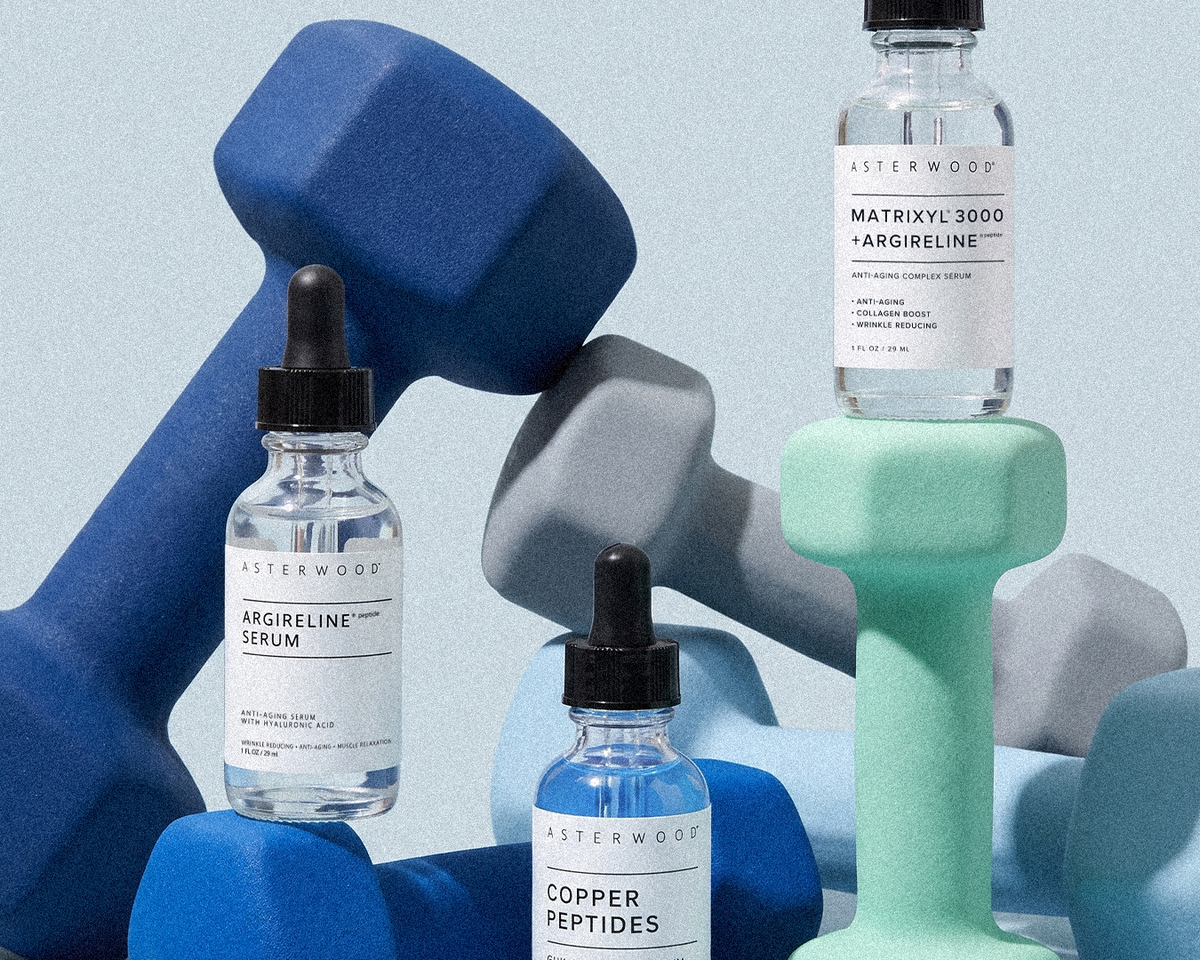
Copper peptides (GHK-Cu), Matrixyl® 3000, and Argireline® are the three peptides you'll see most often on an Asterwood label, and they're not interchangeable — copper peptides focus on firmness and repair, Matrixyl® 3000 is a signal peptide built for fine lines and structure, and Argireline® specifically targets expression lines around the eyes, forehead, and mouth. Most people get the best results by either picking the peptide that matches their main concern, or by using a dual-peptide formula that covers more than one job at once.
What Makes a Peptide “Best” for Your Skin? It Depends on the Job
There's no single best peptide for every skin concern — the right one depends on whether you're after firmness, expression-line softening, or both, since different peptides are built to signal different things to skin.
Peptides work by acting as messengers: a short amino acid sequence prompts skin cells to respond in a specific way — supporting a firmer, smoother-looking appearance, helping skin look and feel more resilient, or by visibly softening the look of expression lines, depending on the peptide. [3] The “best peptide” is really a “best peptide for what” question. The three peptides below cover the vast majority of what's on the market and everything Asterwood formulates with.
Copper Peptides (GHK-Cu): Best for Firmness and Overall Repair
If your main concern is skin that's lost its firm, resilient quality, copper peptides are one of the most extensively studied actives for supporting that — GHK-Cu is a naturally occurring tripeptide with decades of published research behind its use for visibly firmer, more resilient-looking skin. [1]
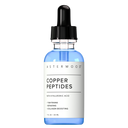
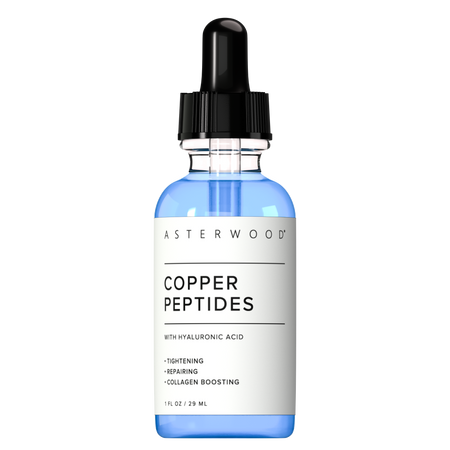
Asterwood's Copper Peptides Serum keeps this ingredient front and center: 0.10% GHK-Cu paired with 1.50% Sodium Hyaluronate, in a 6-ingredient formula with no fragrance and no silicones. It's a good starting point if you want one focused peptide doing one job well, rather than a multi-active formula. For a richer follow-up step that adds barrier support, the Copper Peptides Booster Cream layers the same GHK-Cu with Ectoin and Shea Butter.
Best for: firmness, overall repair, minimalist routines, skin recovering from breakouts.
Matrixyl® 3000: Best for Fine Lines and Structural Firmness
If fine lines and a loss of structure are your main concern rather than expression lines specifically, Matrixyl® 3000 is the signal peptide built for that — it's the most common peptide type in cosmetics for a reason. [3]
Matrixyl® 3000 (Palmitoyl Tripeptide-1 + Palmitoyl Tetrapeptide-7) shows up disclosed at 3% in Asterwood's Matrixyl 3000 + Argireline Serum, where it's paired with Argireline® for a two-peptide approach, and in the Triple Repair Serum (formulated for AM and PM use) and its PM-focused counterpart, the Triple Repair Cream, both of which add stabilized Vitamin C to the mix. If you want Matrixyl® 3000 specifically formulated for the eye area, it's also in the Hyaluronic Acid Eye Serum alongside Niacinamide and Caffeine.
Best for: fine lines, overall firmness, layering with other actives like Vitamin C.
Argireline® (Acetyl Hexapeptide-8): Best for Expression Lines
If it's specifically the lines that move when your face does — around the eyes, forehead, or mouth — Argireline® is the peptide built for that job, working through a completely different mechanism than Matrixyl® 3000 or copper peptides.
Argireline® works through a mechanism entirely different from the other two peptides here — one that's earned it comparisons to injectable treatments, though it works topically and far more mildly. In a Lipotec in-vivo study of 24 volunteers ages 35–45 using it twice daily, researchers measured a 20.6% reduction in wrinkle volume and a 15.9% reduction in wrinkle length after just one week. [2] Asterwood's Argireline Serum runs it at 2% with 1% Hyaluronic Acid in a focused 6-ingredient formula — nothing else competing for attention.
Best for: expression lines around eyes, forehead, and mouth; people who want visible results on a faster early timeline.
Want More Than One Job Done? Here's How the Combinations Work
If firmness and expression lines are both concerns, a dual-peptide formula covers more ground in one step than picking just one single-peptide product.
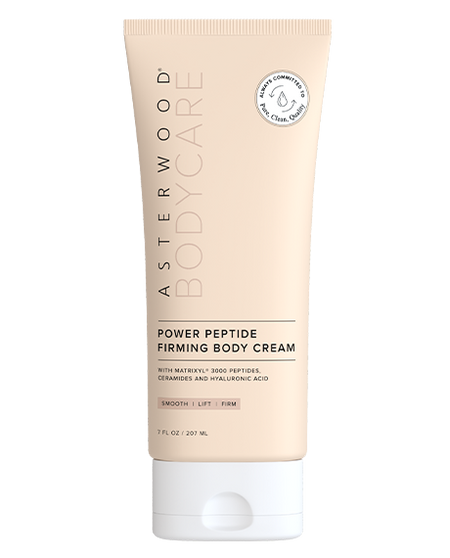
The Matrixyl 3000 + Argireline Serum is Asterwood's most direct answer to “I want both”: 3% Matrixyl® 3000 for firmness and structure, 2% Argireline® for expression lines, 1% Hyaluronic Acid to keep to keep skin hydrated and comfortable, in an 8-ingredient formula. For a body-wide version of the same firming logic — arms, torso, thighs, wherever a facial routine doesn't reach — there's the Power Peptide Firming Body Cream, which pairs Matrixyl® 3000 with the patented LIFT Oléoactif® complex.
If Your Skin Runs Oily, Sensitive, or Acne-Prone
Skin type matters as much as concern when picking a peptide product — a rich cream isn't the right vehicle for oily or acne-prone skin even if the peptide inside it is right for your concern.
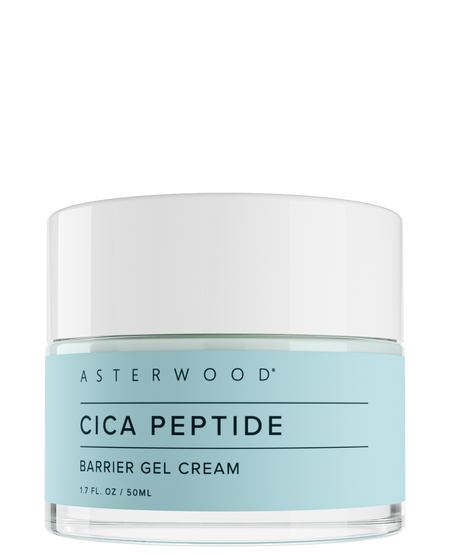
For people with oily, combination, or acne-prone skin that still want peptide firming benefits, the Peptide Barrier Gel Cream uses Matrixyl® Synthe'6® (Palmitoyl Tripeptide-38) in a lightweight gel-cream base instead of a heavier formula, paired with Niacinamide and Centella Asiatica to calm visible redness at the same time.
Reading the Label: Why Ingredient Count and Disclosed Percentage Matter
A short ingredient list with a disclosed peptide percentage is one of the more reliable signals that a product is built around its hero active rather than just listing it to justify a claim.
The Copper Peptides Serum runs 6 ingredients total. The Argireline Serum also runs 6. The Matrixyl 3000 + Argireline Serum runs 8. None of these are padded with filler botanicals, fragrance, or the long “just in case” ingredient lists you'll find on a lot of competing peptide serums. When a peptide percentage isn't disclosed at all on a competing product, that's usually because it's present at a level too low to matter — not because the brand is protecting a secret formula.
Matching Peptides to Your Skin Type, Not Just Your Concern
The right peptide for your concern still needs to come in the right texture for your skin type, or you'll stop using it before it has a chance to work.
Dry or mature skin generally tolerates and benefits from a richer vehicle — the Triple Repair Cream or Copper Peptides Booster Cream layer well on skin that needs more than a lightweight serum provides. Normal to combination skin does well with any of the serums as a standalone step. Oily or acne-prone skin should default to the Peptide Barrier Gel Cream over any of the richer creams, since a heavier occlusive base can feel uncomfortable or contribute to congestion on that skin type even when the peptide inside it is the right fit.
An Honest Note on “Best”: What the Research Actually Supports
Every peptide above has genuine supportive research behind its mechanism, but “best” in cosmetic science means the strongest available evidence for a visible, appearance-level result over weeks — not a guarantee, and not a permanent change.
What separates a well-formulated peptide product from a weak one is disclosed, meaningful concentrations of an actual studied peptide — not a trace amount buried at the bottom of a long ingredient list to justify a claim on the box. That's the standard every product above is held to. Results may vary based on skin condition, consistency, and other individual factors.
Quick Reference: Which Peptide Product Matches Your Concern
- Firmness and repair, minimalist formula: Copper Peptides Serum
- Fine lines and structure, layers well with Vitamin C: Matrixyl 3000 + Argireline Serum, Triple Repair Serum, or Triple Repair Cream
- Expression lines specifically, fastest early results: Argireline Serum
- Both firmness and expression lines in one step: Matrixyl 3000 + Argireline Serum
- Oily, combination, or acne-prone skin: Peptide Barrier Gel Cream
- Body skin beyond the face: Power Peptide Firming Body Cream
How Long Should You Try a Peptide Before Deciding It's Not Working?
Give any peptide product a full 8-12 weeks of consistent use before deciding it isn't right for you — that's the window in which the visible firmness and fine-line results in Asterwood's own results timelines typically appear.
Switching products every few weeks because you don't see change yet is one of the most common reasons peptides get written off as “not working.” Immediate effects — hydration, comfort, a smoother feel — show up right away, but the structural, appearance-level changes these ingredients are actually formulated to deliver take longer to build. If you've used a product consistently for 8-12 weeks with zero change at all, that's a reasonable point to reconsider whether it's the right peptide for your specific concern, or whether a dual-peptide formula might serve you better than a single-peptide one.