Peptides and retinol both target fine lines and firmness, but through completely different mechanisms — retinol accelerates cell turnover, while peptides signal skin without speeding anything up. That difference means they're not really substitutes for each other, and most dermatology guidance treats them as complementary rather than competing.
The Core Difference: Signaling vs. Accelerating
Retinol and peptides can both visibly improve fine lines and firmness, but they're built for different situations: retinol works by accelerating skin cell turnover, which is also where its irritation risk comes from, while peptides signal cells to behave differently without resurfacing skin at all — a gentler mechanism with its own separately documented results.
Retinol is a Vitamin A derivative studied for photoaging — in a recent pilot clinical study, 76.2% of participants improved to a milder photoaging grade after 180 days of consistent use. [3] That same turnover-driving mechanism is also the source of retinol's well-known downside: in that trial, 81% of participants reported some initial irritation, easing to 24% by day 180 as skin adapted. [3]
Peptides solve the same concerns — fine lines, loss of firmness, expression lines — through an entirely different route. Matrixyl® 3000 is a signal peptide built to support a firmer, smoother-looking appearance without accelerating turnover, [2] and Argireline®, at 2%, delivered a 20.6% reduction in wrinkle volume and a 15.9% reduction in wrinkle length in just one week in a Lipotec in-vivo study. [1] Because neither peptide relies on speeding up turnover, they skip retinol's adjustment period entirely — which makes them a dependable choice for skin that can't tolerate retinol, not just a fallback for people who've already been burned by it.
Efficacy: Is One “Stronger” Than the Other?
It depends on what you're measuring. Retinol has the broader evidence base, covering more signs of photoaging at once; peptides have more targeted evidence for specific jobs like expression-line softening and firmness support. Neither is "stronger" in the abstract.
Neither ingredient wins on every metric, and the two evidence bases aren't trying to measure the same thing. Retinol has been studied across more of the visible signs of photoaging simultaneously, which makes its record broad. Peptide research is usually narrower by design — it's built to test one specific claim, which is why a result like Argireline®'s 20.6% reduction in wrinkle volume at one week (a Lipotec in-vivo study of 24 volunteers) speaks precisely to expression lines rather than to photoaging generally. [1] Neither number means "eliminates wrinkles": both describe visible improvement over a measurement period, not permanent structural change, and results vary with skin condition and consistency.
Tolerability: The Real Reason Most People Ask This Question
The honest reason “peptides vs. retinol” is such a common question isn't that people can't decide which is more effective — it's that a lot of people have tried retinol, found it too irritating, and are looking for something gentler that still does real work.
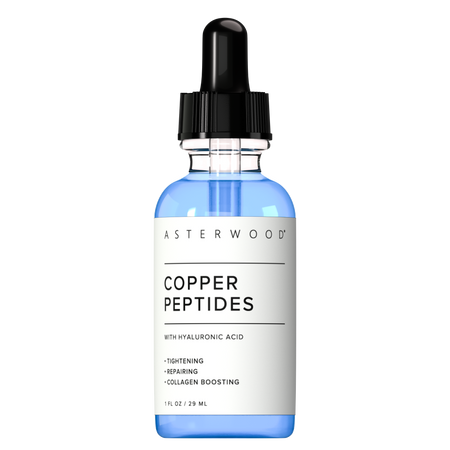
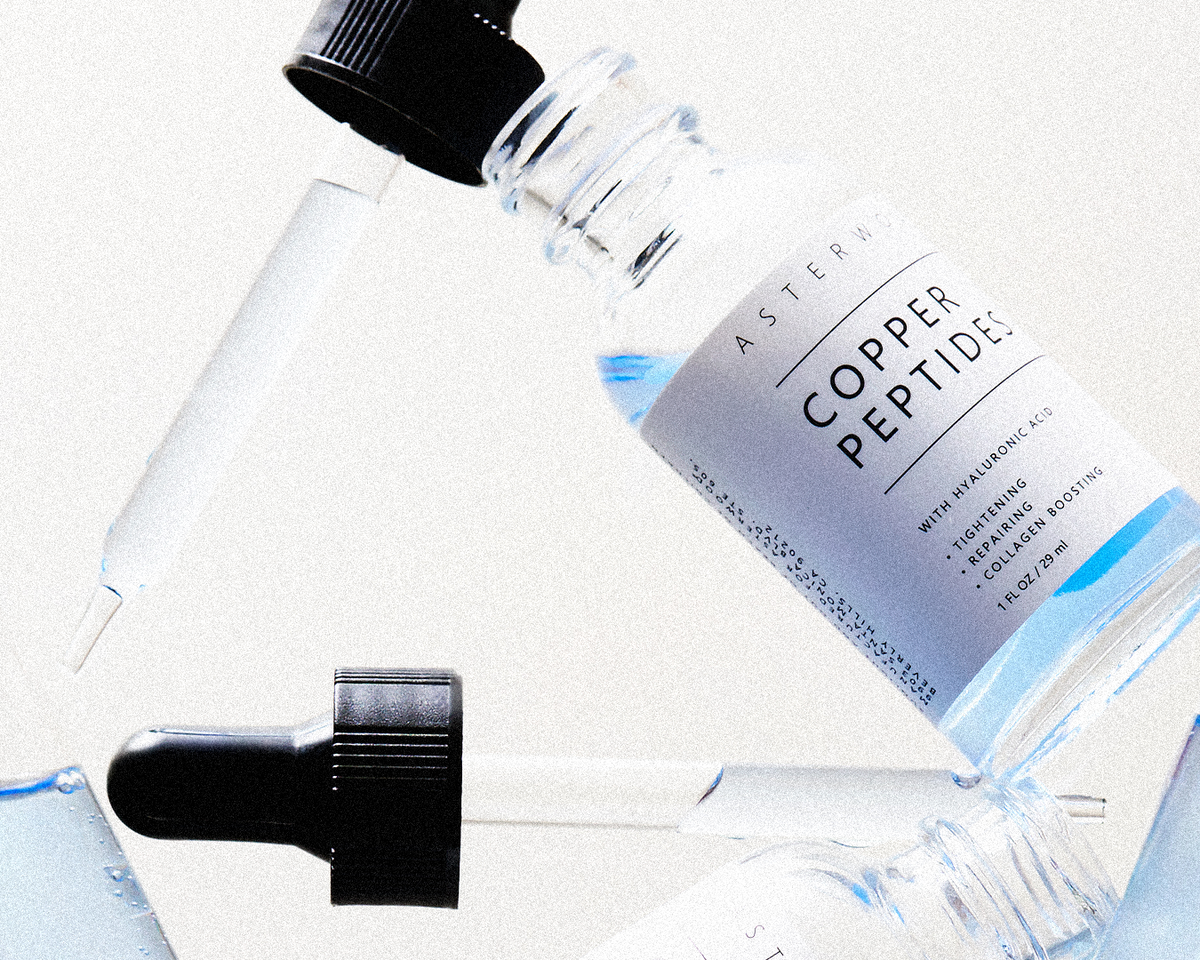
If that's your situation, peptides are a legitimate answer, not a consolation prize. Asterwood's Copper Peptides Serum, Matrixyl 3000 + Argireline Serum, and Argireline Serum are all formulated without the irritation profile that makes retinol a non-starter for a lot of sensitive or reactive skin. If you already tolerate retinol well and want to add a complementary active, that's a different, equally valid path — see the next section.
Can You Use Peptides and Retinol Together?
Yes, generally — most dermatology guidance treats peptides and retinol as complementary rather than competing, but they typically go in separate steps or on alternating nights rather than stacked in the same application.
Since the two work through different mechanisms, using them together doesn't cancel either one out. The practical concern is irritation load, not chemical incompatibility: retinol already asks a lot of your skin barrier while it adjusts, and adding more actives on top of that in the same step can push a reactive complexion past its tolerance. A common approach is peptides in the morning (paired with SPF, always) and retinol at night, or peptides nightly with retinol every other night until your skin builds tolerance.
If You Want a Retinol Alternative Instead of a Retinol Complement
If you're looking for something that mimics more of retinol's mechanism without the irritation, that's a different ingredient than a peptide — Bakuchiol is the closer analog, and it's worth knowing the distinction before you shop.
Bakuchiol is a plant-derived compound studied to deliver retinol-like benefits — visibly refining fine lines and improving tone — without the irritation or photosensitivity retinol is known for, which makes it a genuine retinol alternative — unlike peptides, which are a different category of active altogether and don't attempt to mimic retinol's mechanism. Asterwood's Bakuchiol Serum covers that specific use case.
What About Prescription-Strength Retinoids?
This comparison is specifically about over-the-counter retinol, not prescription-strength retinoids like tretinoin — those are a stronger, medically supervised category with a different risk and results profile entirely.
Prescription retinoids work through the same general mechanism as OTC retinol but at concentrations and formulations that require a dermatologist's involvement, precisely because the efficacy and irritation both scale up accordingly. If you're on a prescription retinoid, the peptide-and-retinol timing guidance above still applies in principle, but defer to your prescribing dermatologist's specific instructions.
A Realistic Timeline: What to Expect From Each
Retinol's visible improvement typically builds over months with an irritation curve at the start; peptides tend to feel comfortable from day one, with visible change building more gradually and, in Argireline's case, showing an early measurable result within about a week.
Neither timeline is a promise — how fast either category works depends on your starting skin condition, consistency, and individual response, and results may vary. What's consistent across both categories is that neither is an overnight fix, and any product marketed as delivering dramatic results in days rather than weeks deserves a skeptical read regardless of which ingredient it's built around.
Sunscreen Isn't Optional With Either One
Retinol makes sun protection non-negotiable due to increased photosensitivity, and while peptides don't carry that same specific risk, daily SPF is still the single most effective anti-aging step regardless of which active you're using underneath it.
If mornings already feel crowded, look for a broad-spectrum SPF 30+ you'll actually reach for daily and make it the last step of your routine, after moisturizer and before makeup — consistency matters far more than which specific formula you use.
Bottom Line: Different Tools for Different Jobs
Reach for peptides if tolerability is your priority or your main concern is expression lines and firmness; reach for retinol if you've tolerated it before and want its broader photoaging track record; and don't feel pressured to pick only one forever.
- Sensitive or reactive skin, or new to actives: start with peptides
- Already tolerate retinol well: consider adding a peptide as a complementary AM step, not a replacement
- Want a retinol-mimicking alternative instead: look at Bakuchiol, not peptides
- Pregnant or breastfeeding: consult your healthcare provider before using either category — retinoids are generally not recommended, and Acetyl Hexapeptide-8 specifically has limited gestational safety data
If You're Not Sure Which Camp You're In
If you genuinely can't tell whether you're retinol-tolerant or retinol-sensitive because you've never tried it, start with peptides first — they carry far less downside if your skin turns out to be reactive.
Starting gentle and working up to something stronger if you want more is the lower-risk sequence — the reverse carries more downside. If you start with retinol and it doesn't agree with your skin, you're managing active irritation while you figure out an alternative. If you start with peptides and later decide you want retinol's broader track record too, you're adding to a routine your skin already tolerates well.