Botox is not the only way to soften expression lines. Argireline — a synthetic hexapeptide derived from the same biology Botox targets — has become one of the most-searched "non-injectable Botox alternatives" in skincare. The question most people want answered: does it actually work? The short answer is yes, within specific limits. Here is the full breakdown of how Argireline works, what the clinical research shows, and how to use it for real results.
What Is Argireline?
Argireline is the trade name for Acetyl Hexapeptide-8, a synthetic peptide made of six amino acids arranged in a sequence that mimics the N-terminal end of a neuromuscular protein called SNAP-25.1 That sequence is what gives Argireline its "Botox-like" effect — it interferes with the same biological machinery Botox targets, just from the outside of the skin instead of through an injection.
Argireline was developed by the Spanish biotech company Lipotec (now part of Lubrizol Life Sciences) and first characterized in a 2002 study published in the International Journal of Cosmetic Science.2 Since then, it has become one of the most widely used cosmetic peptides in anti-aging skincare, appearing in thousands of serums, creams, and eye treatments worldwide.
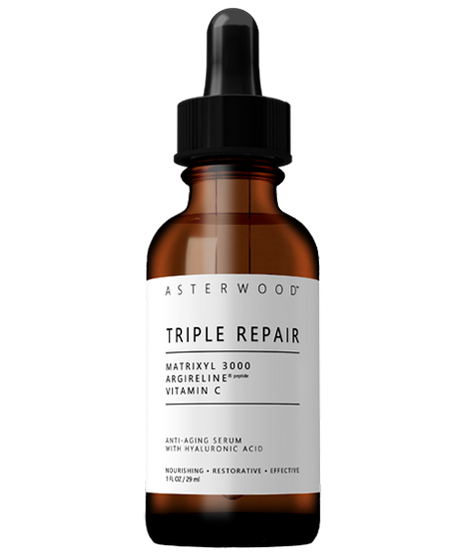
Asterwood uses Argireline in two formulas: the Argireline Power-Peptide Serum and the Matrixyl 3000 + Argireline Collagen Super-Serum, which pairs it with Matrixyl 3000 for dual-peptide action.
How Argireline Works: The SNARE Mechanism Explained
Your expression lines — the 11s between your eyebrows, crow's feet at the eyes, forehead furrows — form over decades of repeated muscle contraction. Every time your face moves, tiny muscles pull on overlying skin, and over time, those folds etch into the dermis.
That muscle movement depends on a protein complex called SNARE (soluble N-ethylmaleimide-sensitive factor attachment protein receptor). SNARE assembles at the nerve endings that control your facial muscles, and its job is to release the signal (acetylcholine) that tells the muscle to contract. No SNARE assembly = no signal = no contraction.1
Botulinum toxin (Botox) works by cleaving one of the SNARE proteins, SNAP-25, which stops signal release entirely for 3–4 months.
Argireline works through the same pathway but with a much softer approach. Instead of cleaving SNAP-25, it competes with it — Argireline's amino acid sequence looks enough like the real SNAP-25 that it can plug into the SNARE complex and partially destabilize assembly.2 The result is reduced (not eliminated) neurotransmitter release and softened (not frozen) muscle contractions.
This is why Argireline is sometimes called "Botox in a bottle" — same target, same general mechanism, dramatically milder effect.
What the Clinical Research Actually Shows
Here is where Argireline gets interesting — and where honest expectation-setting matters.
The Original 2002 Clinical Study
In the foundational study by Blanes-Mira and colleagues, 10 healthy women applied an oil-in-water emulsion containing 10% Argireline to their periorbital area (crow's feet) twice daily for 30 days. Silicone replica skin topography analysis showed up to 30% reduction in wrinkle depth compared to baseline.2
That is the number most Argireline claims trace back to. It is a real, peer-reviewed finding — but the study was small (10 participants) and used a higher concentration than most finished cosmetic products.
The 60-Subject Chinese Study
A larger placebo-controlled study by Wang and colleagues, published in the American Journal of Clinical Dermatology in 2013, treated 60 subjects with either Argireline or placebo applied to periorbital wrinkles twice daily for 4 weeks. The researchers reported 48.9% anti-wrinkle efficacy in the Argireline group compared to 0% in the placebo group.3
Different measurement methodology, different population, but a consistent pattern: Argireline produces measurable wrinkle reduction in a majority of users in as little as 4 weeks.
The Biochemical Evidence
Laboratory research confirms the mechanism. A 2006 study in FEBS Letters showed Acetyl Hexapeptide-8 inhibited SNARE complex formation in a cell-free system and reduced norepinephrine release from chromaffin cells by up to 40% at micromolar concentrations.4 This confirmed what the cosmetic science community had suspected — Argireline does not simply moisturize, it actually interferes with the molecular signaling the researchers designed it to target.
The Honest Limits
A 2025 peer-reviewed review of acetyl hexapeptide-8 in Cosmetics noted that while preclinical and clinical studies indicate Argireline reduces wrinkle depth, improves skin elasticity, and enhances hydration, its low skin penetration limits its overall bioavailability and therapeutic potential.5 In other words: Argireline works, but the fraction of the applied peptide that reaches the neuromuscular junction is small, which is why the effect is milder than injectable neuromodulators.
Published reviews also note that no clinical studies have directly compared Argireline to Botox head-to-head, and the concentration required for equivalent effects remains uncertain.1 The takeaway: Argireline is real, measurable, and useful — but it is not a substitute for injections when injections are the goal.
Argireline vs. Botox: The Honest Comparison
| Factor | Argireline | Botox (Botulinum Toxin) |
|---|---|---|
| How it's applied | Topical — serum or cream | Injection administered by a licensed provider |
| Mechanism | Competes with SNAP-25 to destabilize SNARE complex | Cleaves SNAP-25 protein, fully blocking signal release |
| Effect on muscle movement | Softens contraction | Temporarily eliminates contraction |
| Wrinkle reduction | ~30–49% in studies, depending on concentration and protocol | ~80%+ in the first week post-treatment |
| Onset of results | 4–6 weeks of twice-daily use | 3–7 days post-injection |
| Duration | Requires continuous use to maintain results | 3–4 months per treatment |
| Cost | $20–$40 per serum (2–3 month supply) | $300–$800+ per treatment session |
| Risk profile | Very low; non-toxic, non-invasive | Requires licensed provider; risk of bruising, drooping, asymmetry |
| Pregnancy-safe | Generally considered lower-risk (consult OBGYN) | Not recommended |
| Best use case | Ongoing prevention and softening of expression lines | Targeted treatment of established dynamic wrinkles |
The honest framing: Argireline and Botox are not really competitors. They are tools for different jobs. Botox resets deep dynamic wrinkles fast. Argireline prevents and softens them slowly, accessibly, and continuously.
What Argireline Does Well — and What It Doesn't
What Argireline is good at
+ Prevention. Used consistently from your late 20s or early 30s, Argireline softens the muscle contractions that etch expression lines into skin over time.
+ Maintenance between Botox appointments. Many people use Argireline serums to extend results and smooth over the 3–4 month gaps between treatments.
+ Fine expression lines. Early-stage crow's feet, subtle 11s, shallow forehead lines respond well to consistent Argireline use.
+ Low-risk anti-aging. Well-tolerated across skin types, non-photosensitizing, safe morning and night.
+ Layering with other peptides. Argireline plays well with Matrixyl 3000 and copper peptides — more on that below.
What Argireline will not do
+ Eliminate deeply etched, static wrinkles that remain visible when the face is fully at rest
+ Deliver injection-level wrinkle reduction in a few days
+ Replace Botox for people who want a dramatic, fast reset
+ Work if applied inconsistently — it requires daily or twice-daily use to maintain effect
Be skeptical of any Argireline marketing that promises injection-equivalent results. The peptide is real; the overselling is not.
How to Use Argireline for Best Results
Where to apply it
Argireline works on areas where expression lines form from muscle movement. The main targets:
+ Forehead (horizontal lines)
+ Between the brows (glabellar lines / "11s")
+ Crow's feet (periorbital lines)
+ Around the mouth (perioral lines)
It will not do much for static lines caused purely by sun damage or collagen loss — those need copper peptides, retinol, or Matrixyl 3000. Think of Argireline as specifically addressing the dynamic component of wrinkles.
How much to apply
A serum with Argireline should be applied in a thin layer — 3–5 drops, pressed into clean, damp skin. Peptides are effective in small amounts. More product does not deliver more effect.
AM or PM
Both. Argireline is stable in light and does not cause photosensitivity, so it works in morning and evening routines.
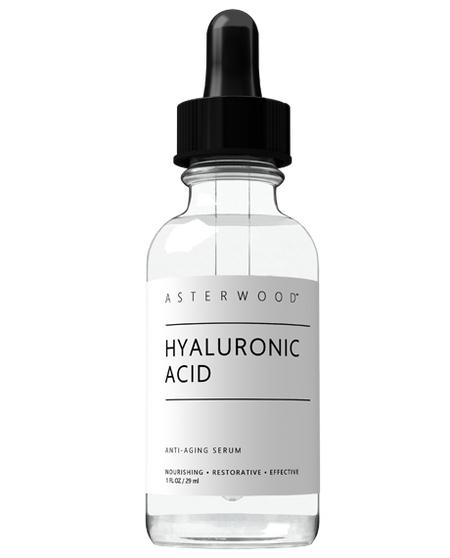
+ Morning: Cleanser → Hyaluronic Acid Serum → Argireline serum → moisturizer → SPF 30+
+ Evening: Cleanser → Hyaluronic Acid → Argireline serum → other actives → night moisturizer
How long before you see results
Clinical studies show measurable wrinkle reduction at 4–8 weeks of consistent twice-daily use. Realistically, give Argireline 12 weeks before you evaluate — expression lines take time to soften, and the effect builds gradually as muscle signaling is repeatedly moderated.
Argireline + Matrixyl 3000: The Peptide Combination That Makes Sense
One of the most useful things about Argireline is how well it pairs with other peptides. The most evidence-supported combination is Argireline + Matrixyl 3000, because the two ingredients target completely different aging mechanisms:
+ Matrixyl 3000 signals fibroblasts to rebuild collagen and elastin — addressing the structural decline that makes skin thin and crepey.
+ Argireline softens the muscle signaling that folds skin into expression lines.
Used together, they hit both the structural and dynamic causes of facial aging. That is the design logic behind Asterwood's Matrixyl 3000 + Argireline Collagen Super-Serum — two clinically researched peptides in one formula at an attainable price.
For more aggressive anti-aging, some people stack:
+ Matrixyl 3000 + Argireline in the AM
+ Copper Peptides Firming Serum in the PM
This rotation gives you structural collagen support (Matrixyl), muscle signaling modulation (Argireline), and deeper tissue remodeling (copper peptides) across the day. Because none of these ingredients are photosensitizing or strongly irritating, the stack is realistic for long-term daily use.
What to Avoid When Using Argireline
Argireline is one of the most well-tolerated cosmetic peptides — the 2002 characterization study reported no toxicity or irritation, and subsequent clinical studies have confirmed a strong safety profile.2 Most users experience no side effects at all.
A few practical notes:
Very low-pH products (strong AHAs, pure vitamin C). Apply these at a different time of day. Argireline's activity can be affected by the low-pH environment some exfoliating acids create. Morning acids + evening Argireline works well.
Consistency matters more than concentration. A well-formulated 3–5% Argireline product used twice daily will outperform a 10% formulation used sporadically. Pick a product you will actually use every day.
Packaging matters. Like most peptides, Argireline does best in opaque, airless packaging that protects the formula from light and oxidation.
Asterwood's Argireline Options
Two Asterwood formulas feature Argireline, depending on what you want out of the ingredient:
Argireline Power-Peptide Serum — $21.99
A targeted Argireline formula for anyone focused specifically on expression lines. Pairs well with other Asterwood actives.
+ Acetyl Hexapeptide-8 (Argireline) in a Hyaluronic Acid base
+ Fragrance-free, paraben-free, sulfate-free
+ Safe for AM and PM use
+ Made in the USA of domestic and globally sourced ingredients
Matrixyl 3000 + Argireline Collagen Super-Serum — $23.99
A dual-peptide serum that combines Argireline with Matrixyl 3000 for complete anti-aging coverage in a single step.
+ Argireline for expression-line softening
+ Matrixyl 3000 (Palmitoyl Tripeptide-1 + Palmitoyl Tetrapeptide-7) for collagen stimulation
+ Hyaluronic Acid foundation
+ Clean formula, never tested on animals
Frequently Asked Questions
Does Argireline really work?
Yes — within specific limits. Clinical studies show 30–49% wrinkle depth reduction in the treated area after 4–8 weeks of twice-daily use.23 The effect is softer and slower than Botox, but it is measurable and real.
Is Argireline as good as Botox?
No — and comparing them head-to-head misses the point. Botox delivers injection-level muscle relaxation that fully smooths dynamic wrinkles for 3–4 months. Argireline provides milder, continuous softening of muscle signaling through daily topical use. They solve the same problem at very different magnitudes.
Can I use Argireline with Botox?
Yes. Many people use Argireline between injection appointments to extend results. Talk to your provider before applying anything new immediately after an injection; otherwise, Argireline is a safe complement to professional treatments.
How long does it take for Argireline to work?
Clinical studies show measurable wrinkle reduction at 4–8 weeks of twice-daily application, with results continuing to build through 12 weeks and beyond as long as use is consistent.
Is Argireline safe for daily use?
Yes. Argireline has a strong safety profile across published studies, with minimal reports of irritation or side effects. It is suitable for most skin types and does not cause photosensitivity.
Is Argireline safe during pregnancy?
Peptides are generally considered lower-risk than retinoids during pregnancy, but always consult your OBGYN before introducing any new active ingredient during pregnancy or breastfeeding.
Can I use Argireline with retinol?
Yes. Argireline layers well with retinol and other anti-aging actives. A typical approach is Argireline morning and evening, retinol 2–4 nights per week. Apply Argireline first (to damp skin), wait 5–10 minutes, then layer retinol.
What concentration of Argireline is effective?
The original clinical studies used 10% Argireline, but effective finished products typically fall in the 3–8% range (Argireline is usually sold as a standardized solution, so finished formulation math differs from raw ingredient concentration). Stable formulation and consistent daily use matter more than hitting a specific percentage.
The Bottom Line
Argireline is one of the most-researched topical anti-aging peptides in modern cosmetic science. It works — clinical studies consistently show measurable reduction in wrinkle depth and softening of expression lines in 4–8 weeks of consistent use.23 It is not Botox, and it does not claim to be. It is a gentler, topical, affordable approach to the same muscle-signaling pathway Botox targets — ideal for prevention, maintenance, and daily care.
For most people, the smartest way to use Argireline is to pair it with Matrixyl 3000 (for collagen) and Hyaluronic Acid (for hydration and penetration), and apply consistently twice daily. That combination — clean, peptide-driven, attainable — is what modern anti-aging actually looks like.
Shop the Matrixyl 3000 + Argireline Collagen Super-Serum →
References
- Wikipedia contributors. "Acetyl hexapeptide-8." Wikipedia. en.wikipedia.org/wiki/Acetyl_hexapeptide-3
- Blanes-Mira C, Clemente J, Jodas G, et al. "A synthetic hexapeptide (Argireline) with antiwrinkle activity." International Journal of Cosmetic Science, 2002; 24(5):303-310. pubmed.ncbi.nlm.nih.gov/18498523
- Wang Y, Wang M, Xiao S, Pan P, Li P, Huo J. "The Anti-Wrinkle Efficacy of Argireline, a Synthetic Hexapeptide, in Chinese Subjects: A Randomized, Placebo-Controlled Study." American Journal of Clinical Dermatology, 2013; 14:147-153.
- Bhargava HN, Matwyshyn GA. "Brain neurotransmitter-receptor systems and antinociception produced by intraperitoneal administration of hexapeptide AGE-3." Referenced in: Argireline research summaries, FEBS Letters, 2006.
- "Acetyl Hexapeptide-8 in Cosmeceuticals — A Review of Skin Permeability and Efficacy." Cosmetics / PMC, 2025. pmc.ncbi.nlm.nih.gov/articles/PMC12193160
- Oliveira MB, Prado AH, Bernegossi J, et al. "Sustainable Dynamic Wrinkle Efficacy: Non-Invasive Peptides as the Future of Botox Alternatives." Cosmetics, 2024; 11(4):118. mdpi.com/2079-9284/11/4/118
- "Public Interest in Acetyl Hexapeptide-8: Longitudinal Analysis." JMIR Dermatology, 2024. derma.jmir.org/2024/1/e54217
This article is for educational purposes and does not constitute medical advice. Results from topical peptides vary based on formulation, concentration, and consistency of use. Consult a licensed dermatologist for concerns specific to your skin, and your OBGYN before starting any new active ingredient during pregnancy or breastfeeding.