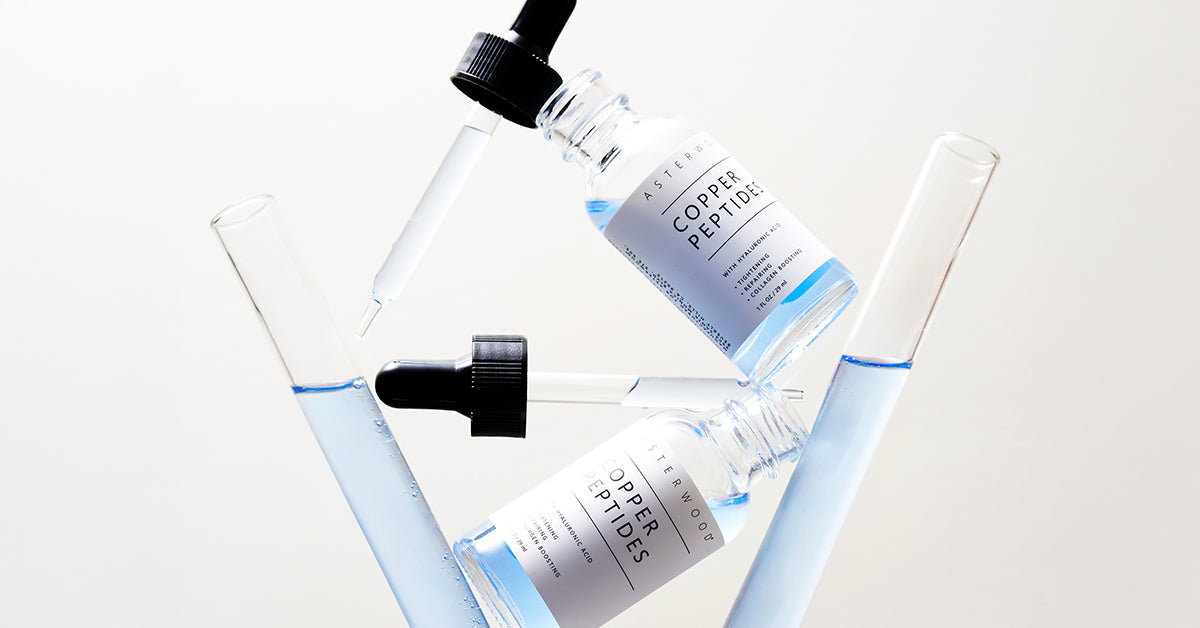
Copper peptides — specifically GHK-Cu — have become the most-talked-about anti-aging ingredient of the last two years. TikTok made them famous; decades of cosmetic research keep them relevant. This guide explains what copper peptides are, what they visibly do for skin, how to use them, and how to fit them into the rest of your routine, without the hype.
GHK-Cu in 30 seconds
GHK-Cu is a copper peptide: three amino acids (glycine, histidine and lysine) bound to copper. It's one of the most researched peptides in cosmetic skincare. In a serum, it's used for visibly firmer, smoother, more even-looking skin and a softer look to fine lines. Apply 2–3 drops morning and/or night, then moisturizer, and SPF in the morning.
How long does GHK-Cu take to work?
Skin feels hydrated and smooth right away. With daily use, expect a more refined-looking surface in 3–4 weeks and visibly firmer, more elastic-looking skin in 6–8 weeks. Full results build over 12 weeks or more, so consistency matters more than amount. Individual results vary.
| When | What you'll notice |
|---|---|
| Right away | Skin feels hydrated and smooth |
| 1–2 weeks | Softer feel, subtle radiance |
| 3–4 weeks | More refined, even-looking surface |
| 6–8 weeks | Visibly firmer, more elastic-looking skin; softer look to fine lines |
| 12+ weeks | Fullest visible results with consistent use |
How much copper peptide serum should I use?
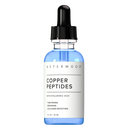
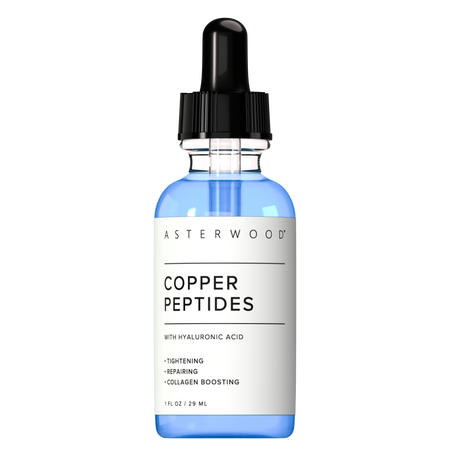
Use 2–3 drops on clean face and neck, once or twice a day, then moisturizer, and SPF in the morning. More isn't better: consistent daily use is what delivers visible results. Asterwood Copper Peptides Serum contains 0.10% GHK-Cu with 1.50% Hyaluronic Acid. Using it alongside retinol? See Copper Peptides + Retinol: Is It Safe to Use Both?
What Are Copper Peptides?
Copper peptides are short chains of amino acids bound to a copper ion. The most-studied version — and the one you want in your skincare — is GHK-Cu, which stands for glycyl-L-histidyl-L-lysine-copper. It is a tripeptide (three amino acids) complexed with a single copper atom, and it occurs naturally in your own body.1
GHK-Cu was first identified in 1973 by Dr. Loren Pickart and has been studied for decades since, which is why it's one of the most researched peptides in cosmetic skincare.1
In a serum, GHK-Cu is used for one simple reason: with consistent use, skin looks firmer, smoother and more even, and fine lines look softer.
What GHK-Cu Visibly Does for Skin
Most actives do one job. Copper peptides cover several visible results at once, which is why they've earned their reputation.
+ Firmer-looking skin. With consistent use, skin looks firmer and more elastic.
+ Smoother texture. The skin's surface looks more refined and even.
+ Softer-looking fine lines. Fine lines look less noticeable over time.
+ Comfortable for most skin types. Copper peptides are gentle enough for daily use, morning or night.
What the Research Shows
Copper peptides have been studied in cosmetic formulas for decades. Two published studies are worth knowing about.
The Facial Cream Study
In a 12-week study, 71 women applied a GHK-Cu cream twice daily. Researchers reported visible improvements in the look of skin firmness, clarity and fine lines.4
The Eye Cream Study
A companion 12-week study of 41 women found a GHK-Cu eye cream improved the look of fine lines around the eyes compared with placebo.4
Both point to the same expectation: visible results build over about 12 weeks of consistent use. These studies used their own formulas; individual results with any product vary.
Understanding Concentration: How Much GHK-Cu Do You Actually Need?
With copper peptides, more is not better. Cosmetic formulas typically use GHK-Cu at low concentrations, most often in the 0.1–1% range, and consistency matters far more than strength.5
How to spot a real copper peptide product:
+ Look for "Copper Tripeptide-1" or "GHK-Cu" in the first third of the ingredient list
+ The formula should appear blue or blue-green — that color is the copper-peptide complex itself
+ pH should sit in the 5.0–7.5 range for stability
For more on the ingredient, see our GHK-Cu ingredient page.
Copper Peptides for Men: Why the Looksmaxxing Crowd Got This One Right
Copper peptides have quietly become a favorite anti-aging ingredient among men who want a simple, effective routine. Two reasons they fit:
Simplicity. One lightweight, fragrance-free serum covers firmer-looking skin, smoother texture and softer-looking fine lines. For a minimalist routine, that's the whole point.
Easy to use. It absorbs fast with no residue, so it works under moisturizer and SPF in the morning or on its own at night, including after shaving once skin feels calm.
Copper peptides are gender-neutral by design. The ingredient works the same way on any skin.
How to Use Copper Peptides: AM vs PM
Copper peptides work morning, evening, or both. The question is what you pair them with.
The simple approach (recommended for most people)
Once a day. Apply 2–3 drops to clean, dry face and neck, press in until absorbed, then follow with moisturizer. Evening works well if you use vitamin C in the morning.
The twice-daily approach
Morning: Cleanse → copper peptide serum → moisturizer → SPF 30+
Evening: Cleanse → copper peptide serum → richer night moisturizer
Using retinol? Keep it in its own routine: copper peptides in the morning, retinol at night. Daily SPF is non-negotiable either way.
Layering Copper Peptides With Other Actives
Most layering questions about GHK-Cu have a clean answer. Here is the short guide.
Hyaluronic Acid — Ideal Pairing
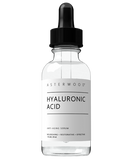
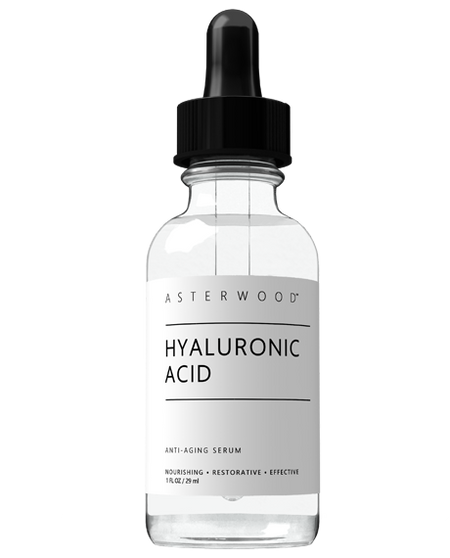
Hyaluronic Acid is the foundation of every Asterwood routine for a reason: it gives every other step a well-hydrated base. Apply Hyaluronic Acid Serum to damp skin first, then layer copper peptides on top. Hydrated skin is the easiest base for the rest of your routine.
Niacinamide — Fully Compatible
Despite old internet rumors that niacinamide and copper peptides cancel each other out, they pair well at cosmetic concentrations. Use them as separate steps: copper peptides first, niacinamide after.
Retinol — Separate Routines
You can use both, just not in the same step. Put copper peptides in your morning routine and retinol at night, or alternate nights if your skin is sensitive. The full routine is in Copper Peptides + Retinol: Is It Safe to Use Both?
Vitamin C — Separate by Time of Day
This is the one pairing that needs care. Both vitamin C (L-ascorbic acid in particular) and copper peptides are oxidation-sensitive, and very low-pH vitamin C formulas can destabilize the copper-peptide complex. Simplest solution: vitamin C in the morning, copper peptides in the evening. You get both benefits, neither is wasted.
AHAs and BHAs — Separate Applications
Keep exfoliating acids in a different routine: acids at night and copper peptides in the morning, or alternate nights.
What to Expect: A Realistic Timeline
Copper peptides are a "slow burn" ingredient: no overnight miracles, but consistent use builds visible results. See the week-by-week timeline at the top of this guide. Give it 12 weeks of consistent daily use before you judge, and take a photo on day one so you have something to compare against.
After a Professional Treatment
If you've had microneedling, a peel or a laser treatment, follow your provider's aftercare instructions first. Don't apply copper peptides to broken or healing skin; ask your provider when it's okay to restart your regular routine.
Safety and Side Effects
Topical GHK-Cu is generally well tolerated across skin types, and most people experience no side effects. A small percentage may notice:
+ Mild tingling or flushing on application
+ Temporary breakout shift (usually resolves in 1–2 weeks)
+ A brief adjustment period in skin texture
Use with caution or skip if you have a known copper allergy or Wilson's disease (a copper metabolism disorder). If you are pregnant or breastfeeding, talk to your OBGYN before adding any new active ingredient, including copper peptides.
Copper Peptides vs. Other Anti-Aging Ingredients: The Short Version
vs. Retinol — Different ingredients with different trade-offs; copper peptides are gentle enough for daytime. Use both in separate routines.
vs. Vitamin C — Vitamin C is for a brighter-looking complexion; copper peptides are for firmer-looking skin. Morning vitamin C, evening copper peptides.
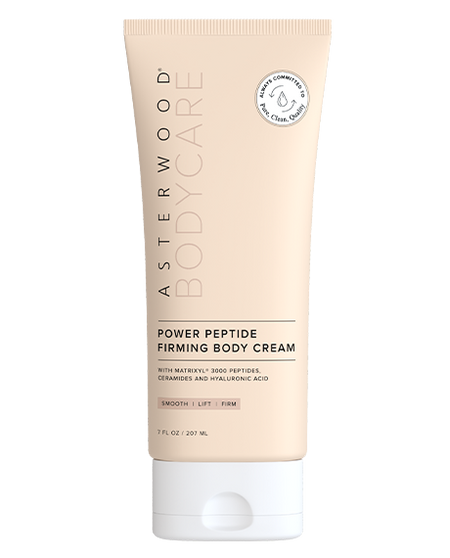
vs. Matrixyl 3000 — Both are peptides used for firmer, smoother-looking skin, and they layer well together. (More on that combination in our Matrixyl 3000 vs Retinol guide.)
vs. Argireline — Argireline is used for the look of expression lines; copper peptides for firmer-looking skin. They pair well for a complete anti-aging routine.
Why Copper Peptides Fit the Asterwood Philosophy
Asterwood builds formulas around one principle: simple, clean, effective ingredients that earn their place in the bottle. Copper peptides are a textbook fit for that standard. GHK-Cu has decades of published research behind it, works at low cosmetic concentrations, and is gentle enough for daily use.
The ingredient also fits Asterwood's broader belief that good skin should not require a complicated routine. One bottle of well-formulated copper peptides covers firmer-looking skin, smoother texture and softer-looking fine lines, so your routine can stay short. That is the kind of compounding value Asterwood is built to deliver at prices anyone can sustain long-term.
The Asterwood Copper Peptides Firming Serum
Asterwood's Copper Peptides Firming Serum pairs GHK-Cu with 1.50% Hyaluronic Acid in a 6-ingredient formula, priced at $19.99 so that twice-daily use for 12 weeks is actually realistic.
+ 0.1% Copper Peptides (GHK-Cu / Copper Tripeptide-1)
+ 1.50% Hyaluronic Acid for immediate hydration
+ Fragrance-free, paraben-free, sulfate-free
+ Never tested on animals
+ Made in the USA of domestic and globally sourced ingredients
Pair it with Asterwood's Hyaluronic Acid Serum as your base layer, and layer our Matrixyl 3000 + Argireline Collagen Super-Serum morning and night for complete peptide coverage.
Frequently Asked Questions
How long does it take for copper peptides to work?
Skin feels hydrated and smooth right away. Expect a more refined-looking surface in 3–4 weeks and visibly firmer, more elastic-looking skin in 6–8 weeks, with fullest results after 12 weeks of daily use. Individual results vary.
What percentage of copper peptides is in the Asterwood serum?
0.10% GHK-Cu, within the range commonly used in cosmetic formulas, with 1.50% Hyaluronic Acid.
Can men use copper peptides?
Yes. GHK-Cu works the same on any skin. The serum is fragrance-free and lightweight, so it fits easily into a simple routine.
Are copper peptides better than retinol?
They're different. Retinol can leave skin dry or sensitive at first; copper peptides are gentle enough for daily use, morning or night. Many people use both, in separate routines: copper peptides in the morning, retinol at night.
Can I use copper peptides with vitamin C?
Yes, but separate them by time of day. Vitamin C in the morning, copper peptides in the evening. This preserves the stability of both ingredients.
Will copper peptides help with hair?
Our serum is formulated for face and neck skin. If hair is your main concern, look for a product designed for the scalp.
Are copper peptides safe during pregnancy?
Data on topical copper peptides during pregnancy is limited. Talk to your healthcare provider before starting any new active ingredient during pregnancy or breastfeeding.
The Bottom Line
Copper peptides are one of the most-researched anti-aging ingredients in cosmetic skincare. They're gentle, gender-neutral and fit easily into most routines. They aren't a miracle (nothing is), but with 12 weeks of consistent use they deliver visible results.
Asterwood's philosophy is simple: clean formulas, research-backed ingredients, attainable prices. Copper peptides fit all three.
Shop the Asterwood Copper Peptides Firming Serum →
References
- Pickart L, Margolina A. "Regenerative and Protective Actions of the GHK-Cu Peptide in the Light of the New Gene Data." International Journal of Molecular Sciences, 2018. pmc.ncbi.nlm.nih.gov/articles/PMC6073405
- Leyden J, Stephens T, Finkey MB, Appa Y, Barkovic S. "Skin Care Benefits of Copper Peptide Containing Facial Cream." American Academy of Dermatology Meeting, 2002.
- Wikipedia contributors. "Copper peptide GHK-Cu." Wikipedia. en.wikipedia.org/wiki/Copper_peptide_GHK-Cu
This article is for educational purposes and does not constitute medical advice. Results from skincare ingredients vary based on skin type, concentration, formulation, and consistency of use. Consult a licensed dermatologist for concerns specific to your skin.