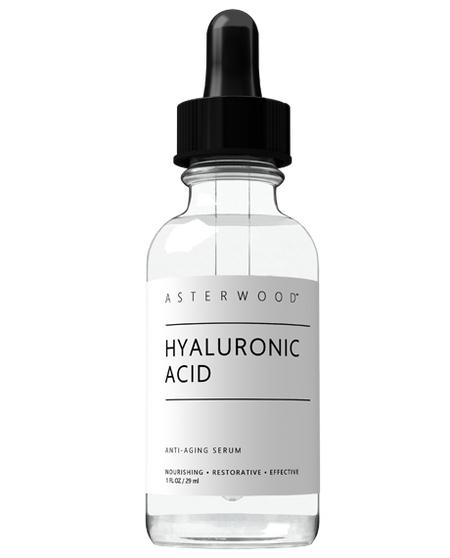
Copper peptides are one of the most well-tolerated anti-aging actives available — but not every copper peptide serum is sensitive-skin friendly. Here's what makes a formula safe for reactive skin, and how to introduce it without triggering a flare.
Are copper peptides safe for sensitive skin?
For most users, yes. Copper peptides themselves are generally well-tolerated by sensitive skin [2]. They don't accelerate cell turnover the way retinol does, so there's no peeling or purging phase. Copper peptides don't cause photosensitivity, so they don't need to be carefully timed around sun exposure, and the active itself, GHK-Cu, is a peptide your body already produces — it's not foreign to skin [1,3].
The reaction risk in any copper peptide serum almost always comes from other ingredients in the formula, not the copper peptide itself. Fragrance, dyes, essential oils, harsh preservatives, and irritating texture modifiers are the usual culprits that cause reactions; a clean, short-ingredient formula sidesteps most of them. A 20-ingredient formula with a fragrance compound and added botanical extracts is where sensitive skin gets into trouble.
What makes a copper peptide serum sensitive-skin friendly
Five things to look for on the ingredient list before you commit to a serum:
1. No fragrance, no essential oils
Fragrance is the single most common source of skin reactions, especially on skin that's already reacting to other actives in a routine. Fragrances can appear on the ingredient list as "fragrance," "parfum," "essential oil," or as individual oil names (lavender oil, rose oil, citrus oils). All of them carry the same risk. A sensitive-skin formula has none of them.
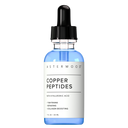
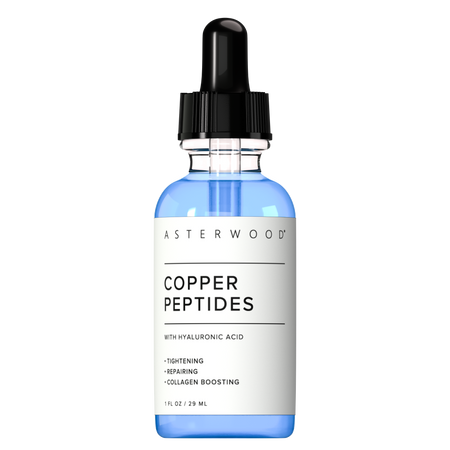
Our Copper Peptides Firming Serum is fragrance-free with no essential oils. The formula has no added scent — any faint smell you notice when you open the bottle comes from the raw ingredients themselves, not perfume.
2. No synthetic dyes or colorants
Dyes serve no functional purpose. They're added for shelf appeal and they add irritation risk. Look for "no synthetic colorants" or check that no FD&C or D&C numbers appear on the ingredient list.
Asterwood's serum has no added dyes. Its natural blue-green color comes from the copper itself — when it's properly formulated, GHK-Cu produces that distinctive aqua tint without any color additives.
3. A short ingredient list
The more ingredients in a formula, the higher the cumulative reaction risk. Every additional ingredient is another potential trigger. For sensitive skin, shorter is almost always better.
Asterwood's Copper Peptides Firming Serum has six ingredients total: Water, Pentylene Glycol, Phenylpropanol, Sodium Hyaluronate, Copper Tripeptide-1, Sodium Hydroxide. The formula is ingredient-forward, contains no fillers and nothing that is unnecessary.
4. Clean preservation system
Every cosmetic formula needs preservation to stay safe over its shelf life. The question is what's doing the preserving. Older preservative systems (formaldehyde-releasing preservatives, certain parabens) are more likely to trigger sensitive skin than modern ones.
Asterwood's formula uses pentylene glycol (a humectant with antimicrobial properties) and phenylpropanol (a modern solubilizer-preservative) for clean preservation, and is formulated without parabens, sulfates, phthalates, formaldehyde, EDTA, or aluminum.
5. Free of the brand's strict do-not-use list
Asterwood maintains a comprehensive do-not-use list that's particularly relevant for sensitive skin. Every Asterwood formula, including the Copper Peptides Firming Serum, is always formulated without:
- Parabens, sulfates, SLS/SLES
- Fragrance and essential oils
- Dyes and synthetic colorants
- Dimethicone
- Aluminum and chemical sunscreens
- EDTA, formaldehyde, hydroquinone
- Petrolatum, paraffin, phthalates
- Palm oil, talc, nanoparticles
This is the strict standard the brand holds itself to. For sensitive-skin shoppers, it's the difference between a formula that works with reactive skin and one that triggers it.
Are there any reasons to avoid copper peptides?
A small number of users should approach copper peptides with extra care or skip them entirely:
Known copper sensitivity or allergy
Copper allergies are rare but real. If you have a known allergy to copper (most often diagnosed via patch testing for contact dermatitis to copper-containing jewelry or dental work), copper peptides are not the right active for you. The mechanism is the same — your immune system is reacting to the copper itself. Talk to your healthcare provider before introducing any copper peptide product.
Active open wounds or broken skin
Avoid applying copper peptides to open wounds, fresh cuts, or actively broken skin. Wait until the skin barrier is intact before introducing any active. This is general guidance for all topical actives, not specific to copper peptides.
Pregnancy or breastfeeding
The safety data on cosmetic copper peptides during pregnancy and breastfeeding is limited. Consult your healthcare provider before starting any new active during pregnancy or breastfeeding. This is general best practice across all anti-aging actives.
Active rosacea or eczema flares
Copper peptides themselves are unlikely to trigger a rosacea or eczema flare, but introducing any new active during an active flare is generally not recommended. Wait until your skin is calm and stable before adding copper peptides. If you have a chronic condition that affects how your skin tolerates actives, talk to your dermatologist before starting.
How to patch test a copper peptide serum
Patch testing is the simplest insurance against an unexpected reaction. The process:
- Pick a small test area. The inside of your forearm or behind the ear works well. Skip the face for the test.
- Apply a small amount of product. One drop is enough.
- Leave it on for 24 hours. Don't wash the area or apply other products to it during that window.
- Check for redness, itching, burning, or swelling. Mild tingling that resolves within a few minutes is generally not a reaction. Persistent redness, itching, or any swelling is.
- If clear after 24 hours, repeat for 2 to 3 days. Some reactions develop over multiple exposures. A longer test window catches delayed reactions.
- If still clear, introduce slowly on your face. Start with one application every other day for the first week, then daily, then twice daily if your routine calls for it.
If you have a history of skin reactions to skincare products, patch testing isn't optional — it's how you avoid a flare that puts your routine on hold for weeks.
The simplest sensitive-skin-friendly routine
If you're introducing copper peptides to sensitive skin, simpler is safer. Start with a minimal routine and let your skin acclimate before layering anything else:
Morning
- Gentle, low-foaming cleanser
- Copper Peptides Firming Serum (2 to 3 drops, every other day for the first week)
- Fragrance-free moisturizer
- Broad-spectrum SPF (mineral sunscreens are gentler for reactive skin)
Evening
- Same gentle cleanser (double cleanse if you wore makeup or SPF)
- Fragrance-free moisturizer
For the first week, keep the copper peptide serum to your morning routine only and skip the PM application. Watch for any signs of redness, dryness, or sensitivity that weren't there before. If your skin is calm after a week, move to once-daily in the morning, then add the PM application after another week if you want faster results.
If you experience any redness or sensitivity, pause the serum, give your skin a few days to settle, and reintroduce gradually. Most sensitive-skin users tolerate copper peptides well — but the buildup approach gives you the most control if your skin is unpredictable.
What to layer with copper peptides on sensitive skin
For sensitive skin specifically, simpler routines are better. Stick to ingredients that play well with copper peptides and avoid stacking too many actives at once:
Safe to layer in the same routine
- Hyaluronic Acid serums and moisturizers — complementary hydration, no irritation risk
- Ceramide-based barrier creams — actively support sensitive skin's barrier function
- Mineral SPF (zinc oxide or titanium dioxide) — gentler for reactive skin than chemical sunscreens
- Gentle, fragrance-free moisturizers — the simpler, the better
Approach with caution on sensitive skin
- Niacinamide — can be used as a separate step but introduce one new active at a time
- Vitamin C serums — wait until you've established copper peptide tolerance before adding
- Any product with fragrance, essential oils, or dyes — sensitive skin reacts to these even when other actives are tolerated
Avoid on sensitive skin until your barrier is stable
- Strong AHAs (glycolic acid, lactic acid exfoliants)
- Strong BHAs (salicylic acid exfoliants)
- Retinol and retinoids
- High-concentration vitamin C (especially L-ascorbic acid above 10%)
None of these are necessarily off-limits long-term — many users with sensitive skin eventually tolerate them with careful introduction. While you're establishing whether copper peptides work for your skin, however, fewer actives means fewer variables. Get one new active established cleanly before adding another.
Signs your skin isn't tolerating the formula
Most sensitive-skin users tolerate Asterwood's Copper Peptides Firming Serum without issue. If your skin is reacting, here are the signs to watch for:
- Persistent redness that wasn't there before starting the product
- Itching, burning, or stinging that doesn't resolve within minutes of application
- Dryness or flaking that's new since starting the serum
- Small bumps or welts in the treated area
- Visible swelling, particularly around the eyes
If you notice any of these reactions, pause the product immediately. Most reactions resolve within a few days of stopping. If a reaction is severe or doesn't resolve within a week of stopping, talk to your healthcare provider.
Some users feel a slight tingle from any active serum on first application; if it doesn't persist and isn't accompanied by visible redness, it's typically not cause for concern.
The Asterwood Copper Peptides Firming Serum for sensitive skin
This is the formula this whole article describes — built around the criteria above. Six ingredients total. 0.10% GHK-Cu paired with 1.50% Sodium Hyaluronate, the brand's foundation ingredient — a natural polysaccharide that retains moisture in the body and draws water into skin's upper layers for a plumper, more supple appearance. The formula is always formulated without parabens, sulfates, fragrance, essential oils, dyes, dimethicone, or any of the ingredients on the brand's strict do-not-use list. Fragrance-free, vegan, cruelty-free.
For shoppers with sensitive skin, the 1 oz size is the right place to start — give the formula 8 to 12 weeks of consistent use to evaluate before committing to a larger bulk size.
For more on copper peptides generally, GHK-Cu Copper Peptides: Benefits & Results Timeline covers what the active does, the realistic timeline, and the broader routine context. How to Use Copper Peptides: Morning vs. Night Routine covers the AM and PM placement question in more detail.
This article is for educational purposes and does not constitute medical advice. Consult a licensed dermatologist for concerns specific to your skin.