Review
The complete guide to
GHK-Cu Copper Peptides
One of skincare's most-researched peptide actives. Here's what GHK-Cu does, what to expect, and how to use it for visibly firmer, smoother skin.
What it is
Copper Peptides (GHK-Cu)
Short answer
GHK-Cu is a copper-binding tripeptide that lives naturally in your skin. It’s one of skincare’s most-researched peptide actives. Topically, it supports visibly firmer, more even skin with consistent use. [1,2]
GHK-Cu — short for glycyl-histidyl-lysine combined with a copper ion — was first isolated from human plasma in the 1970s. Researchers noticed something interesting: levels of this peptide drop significantly as we age —younger skin has more of it; older skin has less. [1] When researchers put it back topically they noticed that the skin started behaving in ways that looked a lot like younger skin.
GHK-Cu is one of the most studied peptide actives in skincare, valued for the visible firmness, texture, and smoothness benefits users report with consistent topical use.
What makes GHK-Cu unusual in skincare is the depth of its evidence base. Most cosmetic actives have a handful of supporting studies. GHK-Cu has hundreds — across the look of firmness, texture, and aging skin. [1,2] It’s one of the few topical peptides where the science genuinely earns the marketing.
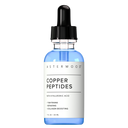
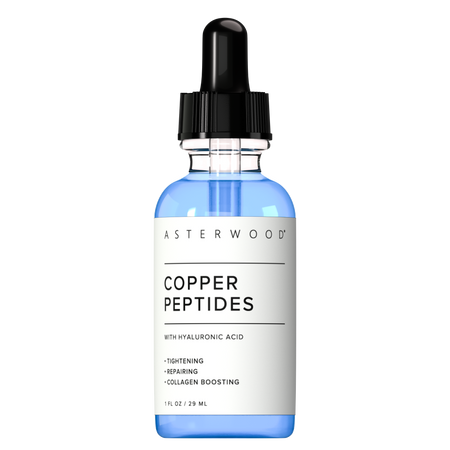
Our approach to copper peptides is minimalist. Our Copper Peptides Serum uses just six ingredients: water, two preservative and humectant agents, Sodium Hyaluronate at 1.50%, GHK-Cu at 0.10%, and a pH adjuster. No fragrance. No silicones. No fillers. The formula's signature blue-green color is a built-in indicator that the GHK-Cu is properly active — copper-bound peptide complexes carry that hue naturally. If a copper peptide serum on the market looks clear or pale, that's worth questioning.
Six ingredients is unusual in active skincare for a reason: most formulas dilute their hero actives with thickeners, silicones, fragrances, and elaborate carrier systems. We chose to go the other direction. Every ingredient in the bottle earns its place because it benefits the result, not the margin.
What it does
Five Visible Benefits of Copper Peptides
Short answer
With consistent daily use, copper peptides help visibly improve skin firmness and elasticity, support a smoother and more even texture, may reduce the appearance of fine lines, deliver lasting hydration when paired with Hyaluronic Acid, and help skin look refreshed and more resilient against everyday stress. [1,2]
Here are the benefits that show up most consistently in clinical research and customer experience:
Visibly improved firmness and elasticity
With consistent use, skin looks firmer and bounces back more readily — the kind of subtle change you notice when your skin starts behaving better.
Smoother, more even texture
With consistent use over weeks, skin looks smoother and more refined. This is often the first visible change users notice — the smoothness shows up before anything else does.
The appearance of fine lines may be reduced
With consistent daily use over 8 to 12 weeks, the appearance of fine lines around the eyes, forehead, and mouth tends to soften. Results vary by individual, age, and consistency of use.
Lasting hydration when paired with Hyaluronic Acid
Asterwood's formula combines GHK-Cu with 1.50% Sodium Hyaluronate — meaning every drop delivers copper peptides on a foundation of deep hydration. Hydrated skin absorbs actives better, and a plumper complexion makes the firming effects more visible from day one.
Support for skin recovery
GHK-Cu has one of the deepest research bases of any cosmetic peptide. For everyday users, that translates to skin that looks calmer and more comfortable after everyday environmental stress. [3]
What to expect
The Copper Peptides Results Timeline
Short answer
Most users notice immediate hydration and skin smoothness, with subtle radiance in the first one to two weeks. More refined texture appears at three to four weeks, visible firmness improvements at six to eight weeks, and maximum benefits with twelve or more weeks of consistent daily use. [2] Results vary.
What you can expect based on the clinical research and our customers' feedback:
- Immediately: Skin feels hydrated and smooth. This is the Hyaluronic Acid working — it draws moisture into the skin's upper layers within minutes of application. The effect is subtle but real and noticeable from the first use.
- One to two weeks: Improved softness and a subtle radiance. Cellular activity is ramping up, but visible changes are still modest. This is the consistency-pays-off window — the work is happening invisibly. If you stop here because you don't see dramatic change, you'll miss the part where the results consolidate.
- Three to four weeks: A more refined, even skin surface. Texture becomes noticeably smoother and pores may appear less prominent. This is when most users start to feel like the serum is doing something — the change is small enough that you might not have noticed it without comparison, but real enough that other people start to comment.
- Six to eight weeks: Visibly improved firmness and elasticity. Fine line improvement begins to show and skin tone evens out. This is the milestone window — the point where controlled studies consistently show measurable change.
- Twelve or more weeks: Maximum visible benefits with continued use. Most users see meaningful firmness, refinement, and an overall more even, more youthful-looking complexion at this point. The benefits compound with continued use beyond twelve weeks.
Results may vary by skin type, age, sun exposure, and consistency of use.
How to use it
How to Add Copper Peptides to Your Routine
Short answer
Apply two to three drops of Copper Peptides Serum to a clean, dry face and neck. Press and pat gently into skin until fully absorbed. Layer with a non-comedogenic moisturizer, then layer with SPF in the morning. Suitable for AM and PM use daily.
Copper peptides are easy to use. They layer well, work in nearly any routine, and are gentle from the start:
- Cleanse with a gentle cleanser.
- Apply two to three drops of Copper Peptides Serum to clean, dry skin. Press and pat gently — don't rub.
- Wait sixty seconds for absorption.
- Layer a moisturizer on top. Any non-comedogenic moisturizer works — its job is to seal in the hydration the serum delivered. Skipping this step means losing a meaningful portion of the serum's hydration benefit.
- In the morning, finish with SPF 30 or higher.
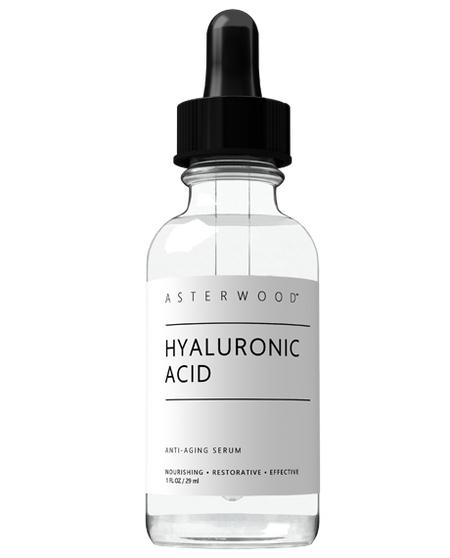
What to layer with: Hyaluronic Acid serums work beautifully underneath copper peptides for an extra hydration boost. Niacinamide is fine in a separate step. Bakuchiol is compatible — pair them for full anti-aging support without retinol's irritation curve.
What to avoid in the same step: Strong AHAs and BHAs, and high-dose Vitamin C. The pH conflict can disrupt the copper peptide complex. If you use these actives, alternate them — copper peptides in the AM, your acid or Vitamin C in the PM, or on alternating days.
For a complete morning and evening routine — including how to handle layering with retinol, vitamin C, and other actives — see our guide on How to Use Copper Peptides Morning vs Night.
Layering considerations
What Copper Peptides Work With (and What They Don't)
Short answer
Copper peptides pair well with Hyaluronic Acid, niacinamide (separate step), gentle toners, moisturizers, and SPF. Avoid same-step layering with strong AHAs, BHAs, or high-dose Vitamin C — alternate these in different routines instead.
The most common question we hear about copper peptides is whether they're safe to combine with other actives. The short answer:
- Compatible in the same routine: Hyaluronic Acid, peptide serums, niacinamide (separate step), gentle toners, ceramide moisturizers, and sunscreen.
- Compatible but alternate routines: Vitamin C, AHAs (glycolic, lactic), BHAs (salicylic), retinol. These actives work best at a low pH, or they drive rapid cell turnover — both of which can interfere with the copper peptide complex if layered immediately on top in the same step.
Retinol is the most common follow-up question. The answer is yes — but in different routines, not the same step. Apply copper peptides in the AM and retinol in the PM. For the full breakdown of why pH timing matters and how to set up a copper-plus-retinol routine, see our compatibility guide on Copper Peptides + Retinol: Is It Safe?
Explore Copper Peptides
Continue reading
More on Copper Peptides
Ingredient Comparison
Copper Peptides vs. Retinol: Which Is Right for You?
Sensitive Skin Guide
Copper Peptides for Sensitive Skin: What to Know Before You Start
Routine Building
How to Use Copper Peptides: Morning vs. Night Routine
Routine Building
Copper Peptides + Retinol: Is It Safe to Use Both?
Shopping Guide
Best Copper Peptide Serums for Aging Skin: How to Choose
Frequently asked
Common Questions
Most users see initial improvements in skin softness and radiance within one to two weeks, more refined texture by three to four weeks, and visible firmness improvements at six to eight weeks. Maximum benefits typically appear at twelve weeks of consistent daily use. Results may vary.
Yes — but in different routines, not the same step. Apply copper peptides in the AM and retinol in the PM. Layered together, the pH difference can reduce the efficacy of both. Read our full compatibility guide on Copper Peptides + Retinol for the detailed answer.
Clinical research supports concentrations between 0.05% and 0.20%. Asterwood's serum uses 0.10% — the well-studied sweet spot. Above this range, additional concentration doesn't deliver proportional benefits. [2]
Consult your healthcare provider before adding any active ingredient to your routine during pregnancy or while nursing.
The natural blue-green color comes from properly active GHK-Cu in the formula — copper-bound peptide complexes carry that signature hue. Clear or pale serums labeled as copper peptides may indicate a less active formulation.
Yes. Copper peptides are gentle and suitable for daily use, AM and PM. There's no acclimation period and no purge phase like you'd see with retinol.
Asterwood's formula is non-comedogenic and free of pore-clogging fillers. If you're experiencing breakouts after starting any new serum, consider whether the issue is the active itself or other products in your routine.
Not in the same step. The acidic pH of Vitamin C can interfere with the copper peptide complex. Alternate them: Vitamin C in the AM, copper peptides in the PM, or use them on alternating days.
No. GHK-Cu is a specific peptide-copper complex. Generic copper supplements or topicals don't have the same skin-signaling activity — the peptide structure is what makes GHK-Cu work the way it does in skin.
The science
Research Cited
Review
Skin Regenerative and Anti-Cancer Actions of Copper Peptides
View studyRetinoids: active molecules influencing skin structure formation in cosmetic and dermatological treatments
View studyRetinoids in the treatment of skin aging: an overview of clinical efficacy and safety
View studyView All Studies Show fewer
Review
GHK-Cu may Prevent Oxidative Stress in Skin by Regulating Copper and Modifying Expression of Numerous Antioxidant Genes
View studyNiacinamide: A B Vitamin that Improves Aging Facial Skin Appearance
View studyReferences
- Pickart L, Margolina A (2018). Regenerative and Protective Actions of the GHK-Cu Peptide in the Light of the New Gene Data. International Journal of Molecular Sciences, 19(7), 1987.
- Pickart L, Margolina A (2018). Skin Regenerative and Anti-Cancer Actions of Copper Peptides. Cosmetics, 5(2), 29.
- Pickart L, Vasquez-Soltero JM, Margolina A (2015). GHK-Cu may Prevent Oxidative Stress in Skin by Regulating Copper and Modifying Expression of Numerous Antioxidant Genes. Cosmetics, 2(3), 236-247.
This article is for educational purposes and does not constitute medical advice. Consult a licensed dermatologist for concerns specific to your skin.