Neither is universally better. They're different mechanisms with different trade-offs. Here's the practical framework for picking the one that fits your skin, your goals, and your tolerance for irritation.
The quick decision framework
If you want the short version before reading the full breakdown:
- Pick retinol if you tolerate it well, want the most potent over-the-counter anti-aging active available, and are comfortable with strict daily SPF use, occasional irritation, and a 2 to 6 week adjustment period.
- Pick copper peptides if you have sensitive skin, have tried retinol and had a bad reaction, want a routine you can layer without scheduling conflicts, or prefer a clean, gentle active that delivers gradual results without a purging phase.
- Use both (copper peptides AM, retinol PM) if you want to maximize anti-aging visible results and your skin tolerates retinol well. Copper Peptides + Retinol: Is It Safe? covers the layering question in detail.
The rest of the article explains how each ingredient works, who they're typically a better fit for, and how to think about which one matches your situation.
How they differ
Both ingredients address similar concerns — fine lines, firmness, texture — but they get there through different biological pathways.
Retinol
Retinol is a vitamin A derivative that accelerates skin cell turnover [3,4]. Skin normally renews itself on a 28 to 40 day cycle; retinol speeds that up, which is what produces both the benefits (faster surface renewal, visibly reduced fine lines, eventual collagen support) and the side effects (peeling, redness, sensitivity to sun, the "purging" phase when newcomers first start).
Retinol has decades of clinical research behind it and is the most-studied over-the-counter anti-aging active available [4]. It also has the most well-documented side effects of any common anti-aging ingredient, which is part of the reason newcomers find it intimidating.
Copper peptides (GHK-Cu)
Copper peptides work through biological signaling rather than accelerated turnover [1,2]. They support skin's natural collagen and elastin — the structural proteins that give skin firmness — without forcing the surface to turn over faster than it normally would.
The result is a gentler experience: no peeling, no redness, no purging, no photosensitivity. The trade-off is that results are more gradual. Copper peptides typically take 6 to 12 weeks to show the kind of visible firmness improvements retinol can produce in 4 to 6 weeks for users who tolerate it well.
Which one delivers more visible results?
This is the question that doesn't have a clear answer, because "more results" depends on what you're measuring and over what time period.
For dramatic, visible changes in the shortest time, retinol has the edge — when it's tolerated. The accelerated turnover produces faster surface changes, and the cumulative collagen support over months is well-documented.
For consistent visible results without irritation, copper peptides have the edge. The biological signaling produces real structural improvements; they just build at the pace skin naturally remodels tissue. For users who can't tolerate retinol or who repeatedly fall off retinol routines because of irritation, copper peptides often deliver better total results — because consistency wins over intensity.
The honest framing: a copper peptide routine that someone sticks with for 12 months produces better visible results than a retinol routine that someone quits after 6 weeks because of irritation. The ingredient that works best is the one you'll actually use consistently.
Which is better for sensitive skin?
Copper peptides, almost always. The lack of photosensitivity, the absence of a purging phase, and the gentle pH make them a much easier fit for sensitive skin types.
Sensitive-skin shoppers who tried retinol early and had the reaction so many do — flaking, redness, persistent sensitivity that didn't go away with lower concentrations — often find that switching to a copper peptide serum is the moment their routine sticks.
If retinol has caused you irritation in the past, that doesn't usually go away with lower concentrations or buffering products. Some users' skin doesn't respond well to retinol, and forcing it can damage the skin barrier and produce worse long-term outcomes than skipping the ingredient entirely. For these users, copper peptides aren't a "settle for less" choice; they're a different mechanism that's appropriate for their skin.
What about combining them?
For users who tolerate retinol well, the question often shifts from "which one" to "can I have both." The answer is yes, with the caveat that they need to be applied in separate routines (typically copper peptides in the AM, retinol in the PM) rather than the same step.
The reason for separation: the low pH of typical retinol formulas can disrupt copper peptide stability if applied in the same step. Separating by time of day solves this without forcing you to pick one.
Many users with normal-to-resilient skin land on this combined approach long-term — copper peptides during the day for steady signaling and barrier support, retinol at night for accelerated turnover. Full routine details in Copper Peptides + Retinol: Is It Safe?
Choosing based on your situation
A few common scenarios and what tends to work in each:
You've never used any anti-aging active before
Start with copper peptides. They're forgiving, they don't have a tolerance-building period, and they help you build the habit of consistent active use without the steep learning curve. After 8 to 12 weeks of consistent copper peptide use, you'll have a baseline you can evaluate retinol against if you want to add it later.
You've tried retinol and had irritation
Switch to copper peptides. If your skin doesn't tolerate retinol, repeated attempts at lower concentrations often produce the same outcome. Copper peptides are a different mechanism, not a weaker version — they work on different pathways and can deliver visible results in users who can't use retinol at all.
You tolerate retinol well and want the maximum anti-aging effect
Use both. Copper peptides AM, retinol PM. The combined routine delivers visible benefits from both mechanisms.
You have an outdoor-active lifestyle
Copper peptides simplify daily sun safety. Retinol's photosensitivity makes daily SPF non-negotiable; copper peptides don't add that photosensitivity, so a missed SPF day is less consequential — though daily SPF is still the habit worth keeping. For shoppers with outdoor-oriented lifestyles, that's a meaningful difference — copper peptides offer fewer scheduling considerations, a fragrance-free formula, and a routine that runs without thinking about it.
You're in your late 20s, building a preventive routine
Copper peptides are a fine starting point. The biology of supporting collagen works whether you're preventing visible signs of aging or correcting them. Retinol works for prevention too but tends to be more intense than necessary for a 28-year-old's first anti-aging active.
You're in your 40s or 50s, want to address visible aging
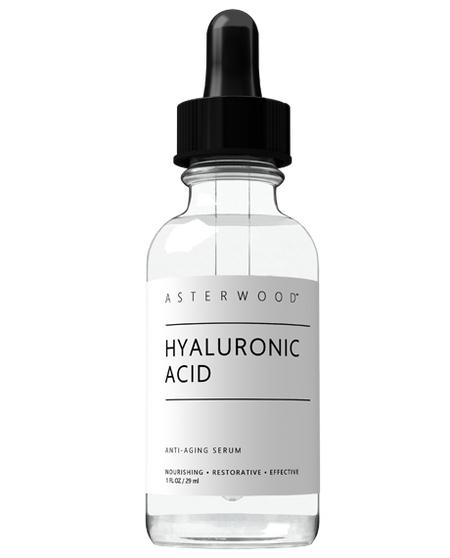
Either works. Retinol produces more dramatic visible changes in shorter timeframes; copper peptides produce more gradual visible changes with less skin disruption. Shoppers in this range who have tried every expensive anti-aging product, know they can't turn back the clock, and prioritize consistent hydration and visible firmness over dramatic short-term shifts often land on copper peptides for the hydration angle, since the Hyaluronic Acid pairing in the formula is meaningful for mature skin. Many add retinol some weeks but not others.
You have very dry skin or a compromised barrier
Copper peptides. Retinol can exacerbate dryness and barrier issues; copper peptides support barrier function rather than challenging it [4]. Pair the copper peptide serum with a ceramide-based moisturizer for additional barrier support.
A note on retinol alternatives generally
Copper peptides aren't the only retinol alternative in Asterwood's library. Bakuchiol is another gentle anti-aging active positioned as a retinol substitute, and the comparison between copper peptides and bakuchiol is its own decision worth thinking about. [TODO: link to "Bakuchiol: The Retinol Alternative Explained" pillar when published]
The straightforward take: copper peptides and bakuchiol are both legitimate gentler alternatives to retinol, with different mechanisms and slightly different target use cases. You don't have to pick between all three — these are tools for different jobs, and a thoughtful, flexible routine can include copper peptides as the daily firming active while reserving retinol or bakuchiol for specific concerns.
Asterwood's honest position
Asterwood doesn't make a retinol product, which gives us no commercial reason to steer you one way or the other. The straightforward answer:
Retinol is a great ingredient for users who tolerate it. Copper peptides are a great ingredient too — even for people who tolerate retinol — because they fill a different role in a routine and layer well with most other actives. If you're choosing between the two, pick the one that fits your skin and your tolerance, not the one with the louder marketing.
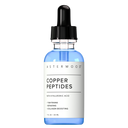
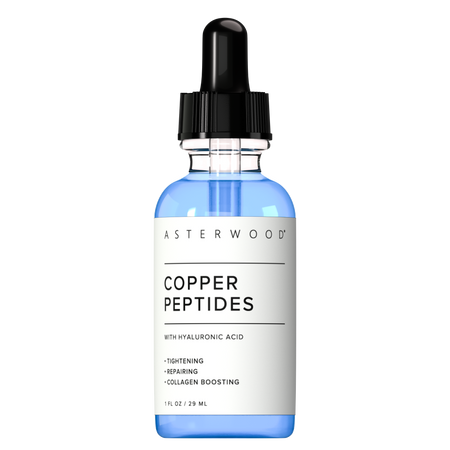
For copper peptides specifically, our Copper Peptides Firming Serum is 0.10% GHK-Cu in a 6-ingredient, fragrance-free formula. Simple. Clean. Effective. GHK-Cu Copper Peptides: Benefits & Results Timeline covers the active in more depth if you want to read further before deciding.
This article is for educational purposes and does not constitute medical advice. Consult a licensed dermatologist for concerns specific to your skin.