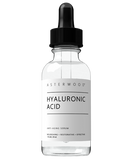
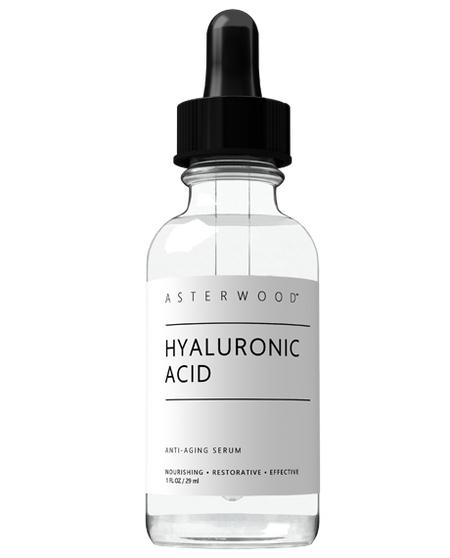
The short answer: Apply a small amount of Hyaluronic Acid Serum to clean skin, morning and night, before your treatment serums. Follow with any treatment serums, then moisturizer, then SPF in the morning. Asterwood's directions call for clean, dry skin. Some people prefer slightly damp skin. In dry climates, never skip the moisturizer on top.
The Basic Steps
Cleanse, apply Hyaluronic Acid, add any treatment serum, moisturize. Add SPF in the morning.
If you're new to serums, Hyaluronic Acid is the easiest one to start with. Here's the whole routine:
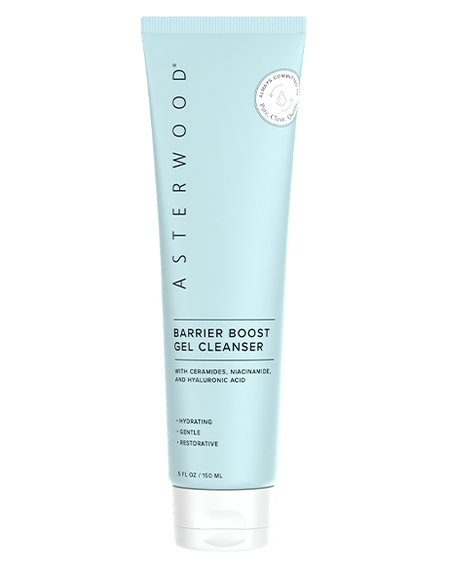
- Cleanse with a gentle, non-stripping cleanser like the Barrier Boost Gel Cleanser.
- Apply Hyaluronic Acid. Put a small amount of Hyaluronic Acid Serum in your palm or directly on your face, and gently massage it in.
- Add a treatment serum if you use one, like a peptide or bakuchiol serum. Using Vitamin C? Apply it before Hyaluronic Acid.
- Moisturize to seal it all in.
- SPF every morning.
If you have sensitive skin, patch test on your neck first.
Signs Your Skin Needs More Hydration
Tightness after cleansing, a dull look, and fine lines that look sharper on dry days are all signs your skin is low on water.
Hydration isn't only a dry-skin issue. Any skin type can run low on water. Watch for:
- A tight feeling after you wash your face
- Skin that looks dull or flat instead of fresh
- Fine lines that look deeper by the end of the day
- Makeup that settles into lines or looks patchy
- Skin that feels oily and tight at the same time
If any of these sound familiar, a daily Hyaluronic Acid step is a good place to start.
How Much to Use
A small amount is enough. A few drops cover your whole face.
It's tempting to use more of a serum you like. With Hyaluronic Acid, more product doesn't mean more hydration. Too much can feel tacky and make the next layer harder to spread. Start small, and add a drop only if your skin still feels dry.
Damp Skin or Dry Skin?
Asterwood's directions call for clean, dry skin. Many people also like applying Hyaluronic Acid to slightly damp skin. Both work, as long as moisturizer goes on after.
You've probably seen advice to apply Hyaluronic Acid to damp skin. The idea is that Hyaluronic Acid is a humectant, meaning it draws water toward it, so starting with a little water on the surface gives it something to hold onto.
Here's how to choose:
- Dry skin application: the standard method on our label. Clean, pat dry, apply.
- Damp skin application: after cleansing, leave skin slightly damp (not dripping) and apply Hyaluronic Acid right away. The Hyaluronic Acid Moisturizer directions include this as an optional pro tip.
Whichever you choose, the step that matters most comes next: moisturizer, to keep the hydration in.
Before or After Moisturizer?
Before. Hyaluronic Acid Serum goes on first, and moisturizer goes on after.
The general rule for layering is thinnest to thickest. A watery serum like Hyaluronic Acid goes on clean skin so it can absorb. A moisturizer goes on top to lock in the hydration. If you use a treatment serum too, it goes between the two: Hyaluronic Acid, then treatment, then moisturizer.
Morning, Night, or Both?
Both. Hyaluronic Acid Serum is made for morning and night use.
In the morning, Hyaluronic Acid gives you a hydrated base that sits comfortably under moisturizer, SPF, and makeup. At night, it's the first layer under your treatment serums. Using it twice a day keeps hydration consistent.
Can You Use It Every Day?
Yes. Hyaluronic Acid is made for daily use.
Unlike exfoliating acids or retinol, Hyaluronic Acid doesn't need rest days or a slow ramp-up. Daily use, twice a day, is how most people get the most from it.
Using Hyaluronic Acid in Dry Climates and Winter
In dry air, seal your Hyaluronic Acid with a moisturizer every time. That step matters more when the air has little moisture to offer.
If you live somewhere dry, at high altitude, or you spend winter in heated rooms, your skin loses water faster. Hyaluronic Acid still helps, but it works best when you give it support:
- Always moisturize after Hyaluronic Acid. Moisturizer helps hold hydration in place.
- Try damp-skin application. It gives Hyaluronic Acid surface water to work with.
- Choose a richer moisturizer. Our Hyaluronic Acid Moisturizer adds Shea Butter and Ectoin on top of 1% Hyaluronic Acid.
- Cleanse with lukewarm water. Hot water can leave skin feeling tighter.
Using Hyaluronic Acid in Humid Climates and Summer
In humid weather, you can often go lighter. Hyaluronic Acid plus a lightweight moisturizer may be all you need.
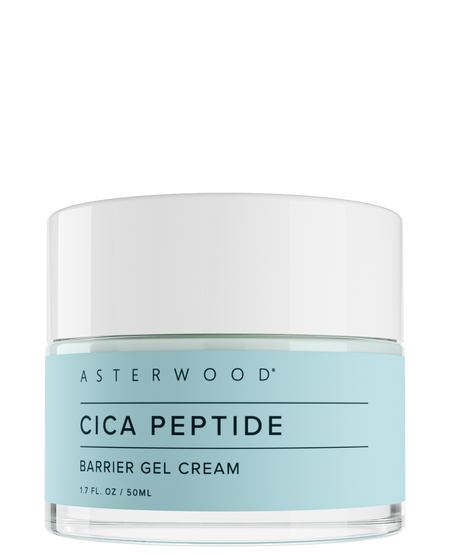
When the air is already moist, heavy layers can feel sticky. A thin layer of Hyaluronic Acid Serum with a light moisturizer keeps skin hydrated without heaviness. If your skin runs oily in summer, a gel cream like the Cica Peptide Barrier Gel Cream is a lighter finish. See is hyaluronic acid good for oily skin for more.
Does Hyaluronic Acid Dry Out Skin?
It shouldn't. If skin feels tight after Hyaluronic Acid, the usual fix is adding moisturizer on top, especially in dry air.
Some people say Hyaluronic Acid makes their skin feel drier. That usually happens in a dry environment when Hyaluronic Acid is used alone, with nothing on top to hold hydration in. Add a moisturizer, or try damp-skin application. If tightness or irritation continues, stop using the product and check in with a dermatologist.
Using Hyaluronic Acid Under Makeup
Hyaluronic Acid makes a smooth, hydrated base for makeup. Give it a minute to absorb, then moisturize and apply SPF before foundation.
Because it's weightless and absorbs fast, Hyaluronic Acid layers under makeup without stickiness. Well-hydrated skin also helps foundation go on more evenly. If makeup pills, you're probably using too much Hyaluronic Acid or not letting each layer settle before the next.
What About the Eye Area?
The skin around your eyes is thinner and more delicate, so a dedicated eye product is the easiest choice.
Our Hyaluronic Acid Eye Serum combines Hyaluronic Acid with peptides, niacinamide, and caffeine in a cooling roller made for the eye area. Glide it from the inner to the outer corner of each eye, then pat gently until absorbed.
Common Mistakes to Avoid
The most common mistakes are using too much, skipping moisturizer, and applying Hyaluronic Acid over thicker products.
- Using too much: a few drops is plenty
- Skipping moisturizer: especially in dry climates
- Applying it last: Hyaluronic Acid goes before creams, not after
- Skipping SPF: hydration doesn't protect skin from the sun
Pairing Hyaluronic Acid with other actives? Read hyaluronic acid and peptides, or go back to the complete hyaluronic acid guide.
This article is for educational purposes and does not constitute medical advice. Consult a licensed dermatologist for concerns specific to your skin.