
Review
The complete guide to
Hyaluronic Acid: The Complete Hydration Guide
The hydrator behind nearly every Asterwood formula. Here's what Hyaluronic Acid does, what to expect, and how to use it for visibly plumper, smoother, more hydrated skin.
What it is
What Hyaluronic Acid Is
Short answer
Hyaluronic Acid is a sugar-based molecule your skin already makes. It draws in and holds onto water, which is why it's one of skincare's most-used hydrators.
If your skin feels tight by midafternoon, or your fine lines look deeper on dry days, the missing ingredient is usually water. Hyaluronic Acid is how skin holds onto it.
Hyaluronic Acid is a polysaccharide, a long chain of sugar molecules. Your body makes it, and roughly half of the body's Hyaluronic Acid is found in skin, where it helps keep skin hydrated and supple [1]. The amount in skin changes as skin ages [1].
What makes it so useful in skincare is how much water it can hold. Hyaluronic Acid is often described as binding up to 1,000 times its volume in water [2]. In plain terms: it's a moisture magnet.
Despite the name, it isn't an exfoliating acid. It doesn't peel or resurface. It hydrates.
What it does
Five Visible Benefits of Hyaluronic Acid
Short answer
Hyaluronic Acid visibly hydrates, plumps, and smooths skin, softens the look of fine lines caused by dryness, and gives every other step in your routine a hydrated base.
Here's what Hyaluronic Acid does, and what the research shows.
1. Deep, lasting hydration
In a 6-week study of a topical Hyaluronic Acid serum used twice a day, skin hydration rose sharply right after application and stayed well above baseline at week six [3].
2. A plumper, more supple look
Well-hydrated skin looks fuller and bouncier. In the same study, dermatologists graded skin as visibly plumper by week six [3].
3. Softer-looking fine lines
Many fine lines are dehydration lines: they look deeper when skin is dry. Hydration helps soften their look. The same study recorded visible improvement in the look of fine lines at six weeks [3].
4. Smoother, softer texture
Dry skin feels rough. Hydrated skin feels smoother and more even, and makeup goes on more easily over it.
5. A better base for everything else
Good skin starts with hydration. Actives like peptides, bakuchiol, and retinol tend to go on more comfortably over a well-hydrated base. That's the idea behind Asterwood's whole routine: start with Hyaluronic Acid, then build.
Results may vary.
Hydration and aging
Why Hydration Matters More as Skin Ages
Short answer
Skin's own Hyaluronic Acid changes with age, and drier skin makes fine lines look deeper. Topical Hyaluronic Acid helps put hydration back on the surface.
If your skin feels drier than it used to, that's not your imagination. Hydration is one of the first things to change as skin matures.
The Hyaluronic Acid in skin changes with age, and those changes are linked with the loss of moisture and suppleness that comes with aging skin [1]. You can't turn that back with a serum. What you can do is give the skin's surface a steady supply of hydration every day.
That matters because dryness exaggerates the look of aging. Fine dehydration lines look sharper, texture looks rougher, and skin looks duller. Hydrated skin reflects light more evenly and looks smoother and fuller. It's one of the simplest, most realistic anti-aging steps there is.
HA vs. sodium hyaluronate
Hyaluronic Acid vs. Sodium Hyaluronate
Short answer
Sodium hyaluronate is the salt form of Hyaluronic Acid. It's what most skincare products use, so it's what you'll usually see on the ingredient list.
If you've flipped over a Hyaluronic Acid serum and found "sodium hyaluronate" instead of "hyaluronic acid," nothing's wrong. They're the same ingredient family.
A review of Hyaluronic Acid skincare products found that more than 95% of them contain sodium hyaluronate rather than Hyaluronic Acid itself [2]. The salt form is stable and easy to formulate with, which is why it's the industry standard.
You may also see Hyaluronic Acid described by molecular weight, which is simply the size of the molecule. Larger Hyaluronic Acid tends to stay on the surface and form a light, moisture-holding film, while smaller Hyaluronic Acid is associated with hydrating the upper layers of skin [2]. For the full explanation, read sodium hyaluronate vs. hyaluronic acid.
What to expect
The Hyaluronic Acid Results Timeline
Short answer
Hydration is visible right away. Smoother texture and softer-looking fine lines build over the following weeks of consistent use.
Hyaluronic Acid is one of the few ingredients where you can see and feel a difference on day one. Here's how it tends to build.
- Immediately: Skin looks and feels more hydrated and plump. In one study, hydration rose sharply right after the first application [3].
- Over the following weeks: With daily use, skin feels softer and more comfortable, and texture looks smoother.
- Week 6: In the same 6-week study, hydration stayed well above baseline, with visible improvements in smoothness, plumpness, and fine lines [3].
Results may vary based on consistency, starting skin condition, and other factors.
That study tested a different brand's serum, not Asterwood's. The takeaway still applies: hydration is immediate, and the visible benefits build with daily use.
How to use it
How to Add Hyaluronic Acid to Your Routine
Short answer
Apply a small amount to clean skin, morning and night, then follow with your treatment serum and moisturizer. Follow with SPF in the morning.
If you only add one serum to your routine, make it this one. It's simple to use and fits anywhere.
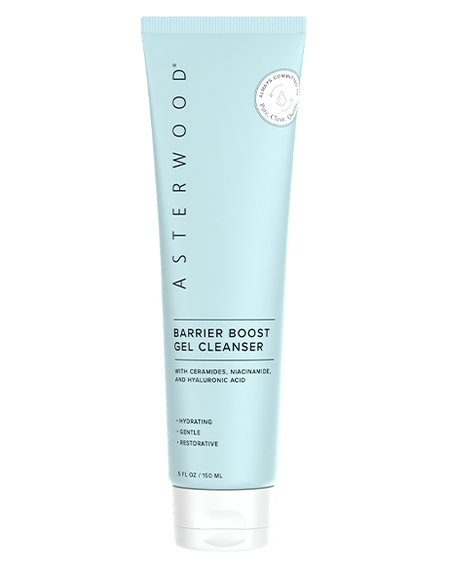
- Cleanse. Start with a gentle cleanser like the Barrier Boost Gel Cleanser.
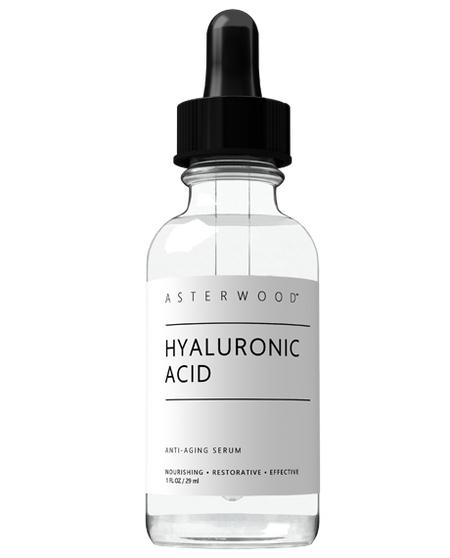
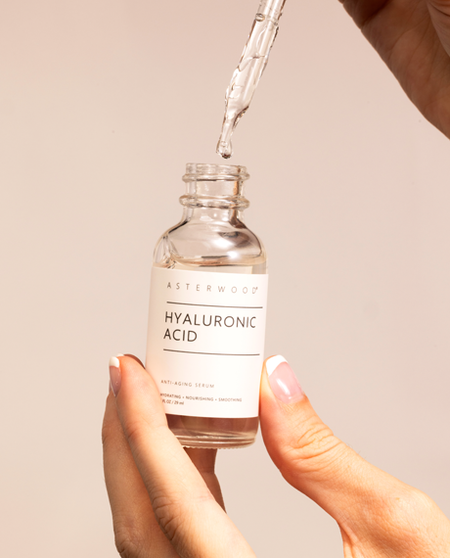
- Apply Hyaluronic Acid. Massage a small amount of Hyaluronic Acid Serum into clean skin.
- Add your treatment. Layer a peptide or bakuchiol serum next, if you use one. Using Vitamin C? Apply it first, then layer Hyaluronic Acid over it.
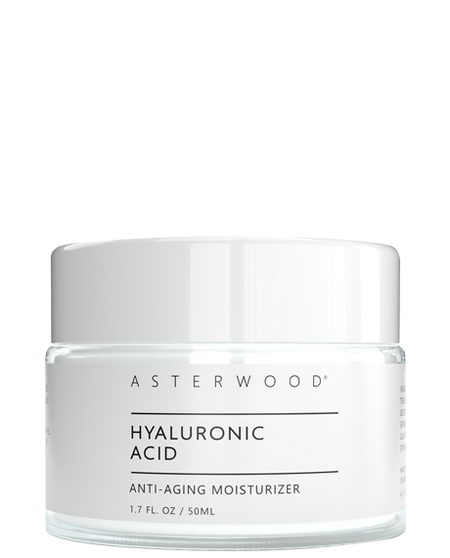
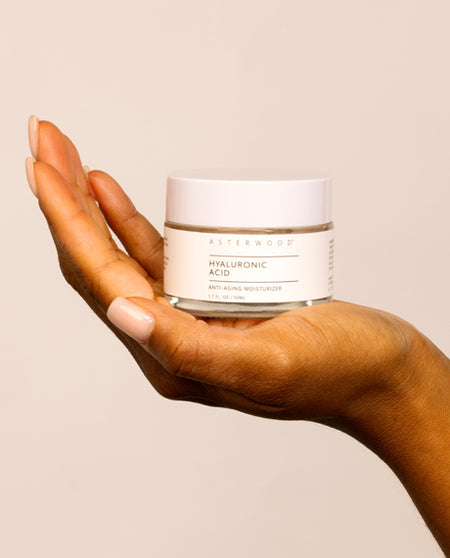
- Moisturize. Seal it in with the Hyaluronic Acid Moisturizer.
- SPF in the morning. Every day.
Damp skin or dry? Morning or night? What changes in a dry climate? See how to use hyaluronic acid serum.
Layering
What Hyaluronic Acid Works With
Short answer
Hyaluronic Acid pairs well with nearly every active: peptides, retinol, bakuchiol, Vitamin C, and niacinamide. It's the step that makes the rest of the routine more comfortable.
If you're building a routine from scratch, Hyaluronic Acid is the easy part. It fits with just about everything.
- Peptides: Asterwood's peptide serums are built on a Hyaluronic Acid base. Layer Hyaluronic Acid Serum first for extra hydration. Read hyaluronic acid and peptides.
- Retinol: Hyaluronic Acid helps keep skin comfortable while you use a retinoid. Read can you use hyaluronic acid with retinol.
- Bakuchiol: layer Hyaluronic Acid underneath. Our Bakuchiol Serum doesn't contain Hyaluronic Acid, so this adds hydration.
- Vitamin C: our Vitamin C Serum already pairs stable Vitamin C with Hyaluronic Acid. Apply Vitamin C first and layer Hyaluronic Acid Serum over it.
- Niacinamide: an easy, compatible pairing for tone and texture.
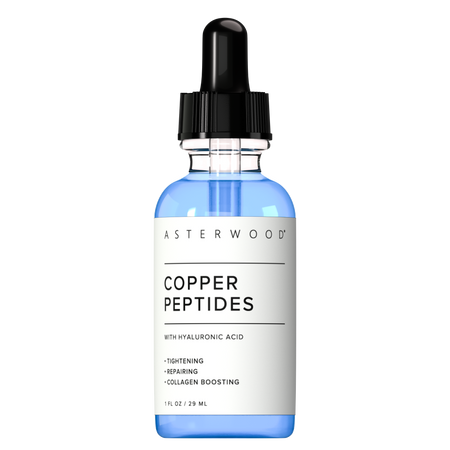
Building a peptide routine? See the Copper Peptides guide and the Matrixyl 3000 guide. Looking for a gentler alternative to retinol? See the Bakuchiol guide.
Is it for you?
Who Hyaluronic Acid Is For
Short answer
Almost everyone. Dry, oily, combination, sensitive, and mature skin all need water, which makes Hyaluronic Acid one of the easiest ingredients to fit into nearly any routine.
If you've been told your skin is "too oily" for a hydrating serum, that's worth rethinking.
- Dry skin: the obvious fit. Hyaluronic Acid helps skin hold onto the water it's missing.
- Oily and breakout-prone skin: Hyaluronic Acid adds hydration without adding oil. Read is hyaluronic acid good for oily skin.
- Sensitive skin: our Hyaluronic Acid Serum is fragrance-free and made for all skin types, including sensitive.
- Mature skin: hydration is the foundation of a realistic anti-aging routine.
The honest limits
Hyaluronic Acid hydrates. That's a big job, and it's also its only job. A topical Hyaluronic Acid serum won't do what injectable fillers do, it won't replace your moisturizer, and it won't protect you from the sun. Think of it as the foundation, not the whole house.
Myths
Common Hyaluronic Acid Myths
Short answer
Hyaluronic Acid isn't only for dry skin, more isn't better, and it doesn't work like a filler. Used with a moisturizer, it's one of the easiest ingredients to get right.
Hyaluronic Acid is popular enough that a lot of half-truths travel with it. Here are the ones we hear most.
"Oily skin doesn't need Hyaluronic Acid."
Oil and water aren't the same thing. Oily skin can still be low on water, and Hyaluronic Acid adds hydration without adding oil.
"More Hyaluronic Acid means more hydration."
A few drops cover your face. Extra product just feels tacky and makes the next layer harder to spread.
"Hyaluronic Acid dries out your skin."
Some people notice tightness when they use Hyaluronic Acid alone in very dry air. The fix is simple: follow with a moisturizer to keep hydration in.
"A serum can do what fillers do."
No. Topical Hyaluronic Acid hydrates the skin's surface for a plumper look. Injectable fillers are a different thing entirely, and a serum isn't a substitute.
Shopping guide
What to Look for in a Hyaluronic Acid Serum
Short answer
Look for a short ingredient list with Hyaluronic Acid listed early, no fragrance, no filler ingredients, and a size and price that make twice-daily use realistic.
If you're comparing Hyaluronic Acid serums, the front label won't tell you much. Here's what to check on the back.
- Hyaluronic Acid listed early. Ingredients above 1% are listed from most to least, so seeing Hyaluronic Acid near the top is a good sign.
- A short ingredient list. Fewer ingredients usually means fewer potential irritants and less filler.
- No fragrance. Fragrance adds nothing to hydration and is a common irritant.
- A lightweight feel. A good Hyaluronic Acid serum absorbs quickly without stickiness, so it layers well.
- A size you can keep using. Hyaluronic Acid works best used every day, twice a day. A bottle you ration won't get you there.
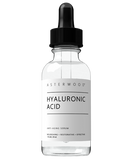
Asterwood's Hyaluronic Acid Serum was built around that list: Hyaluronic Acid in a five-ingredient, fragrance-free formula with no filler ingredients. It comes in 1, 2, 4, and 8 oz sizes, so you're not running out every few weeks.
Why Hyaluronic Acid Earns Its Place
Intensive hydration
Draws in and holds water for skin that feels comfortable all day.
Plumper look
Helps add a supple bounce to your complexion.
Softer-looking lines
Visibly smooths fine lines caused by dryness.
Layers easily
Weightless, fast-absorbing, and easy to pair with other actives.
Continue reading
More on Hyaluronic Acid
Ingredient Comparison
Sodium Hyaluronate vs. Hyaluronic Acid: What's the Difference?
Routine Building
Is Hyaluronic Acid Good for Oily and Breakout-Prone Skin?
Routine Building
Can You Use Hyaluronic Acid with Retinol?
Routine Building
How to Use Hyaluronic Acid Serum: Damp Skin, Layering & Dry Climates
Routine Building
Hyaluronic Acid and Peptides: How to Pair Them
Frequently asked
Common Questions
Hyaluronic Acid is a humectant, meaning it draws in and holds onto water. On skin, that shows up as a more hydrated, plumper, smoother look, including softer-looking fine lines caused by dryness.
Not in the way exfoliating acids are. Hyaluronic Acid doesn't exfoliate or peel. It's a sugar-based molecule your skin already makes, and in skincare it works as a hydrator.
Yes. Hyaluronic Acid Serum is made for daily use, morning and night.
Before. Serums go on first because they're thinner. Moisturizer goes on after to seal the hydration in.
Yes. Hyaluronic Acid pairs well with retinol, and many people use it to keep skin comfortable while using a retinoid. Follow your retinol's directions and moisturize after.
Yes. Our Vitamin C Serum already pairs Vitamin C with Hyaluronic Acid in one formula, and a separate Hyaluronic Acid layer fits alongside it too.
Yes. Hyaluronic Acid adds water-based hydration without adding oil, and our Hyaluronic Acid Serum is a lightweight, water-based formula with no added oils.
Sodium hyaluronate is the salt form of Hyaluronic Acid. It's the form most skincare products use, and it's what you'll usually see on an ingredient list.
No. A topical serum hydrates the skin's surface for a plumper, smoother look. It doesn't do what injectable fillers do, and it isn't a substitute for them.
Hyaluronic Acid is generally well tolerated, and our Hyaluronic Acid Serum is fragrance-free and made for all skin types, including sensitive. Patch test any new product first.
The science
Research Cited
Review
Hyaluronic acid: A key molecule in skin aging
View studyRetinoids in the treatment of skin aging: an overview of clinical efficacy and safety
View studyClinical Trial
Prospective, randomized, double-blind assessment of topical bakuchiol and retinol for facial photoageing
View studyReferences
- Papakonstantinou E, Roth M, Karakiulakis G (2012). Hyaluronic acid: A key molecule in skin aging. Dermato-Endocrinology, 4(3), 253–258.
- Juncan AM, Moisă DG, Santini A, et al. (2021). Advantages of Hyaluronic Acid and Its Combination with Other Bioactive Ingredients in Cosmeceuticals. Molecules, 26(15), 4429.
- Draelos ZD, Diaz I, Namkoong J, Wu J, Boyd T (2021). Efficacy Evaluation of a Topical Hyaluronic Acid Serum in Facial Photoaging. Dermatology and Therapy, 11(4), 1385–1394.
Start Every Routine with Hydration
Hyaluronic Acid Serum: five ingredients, no fillers, fragrance-free. In 1, 2, 4, and 8 oz sizes. Simple. Clean. Effective.
This article is for educational purposes and does not constitute medical advice. Consult a licensed dermatologist for concerns specific to your skin.
Matrixyl® 3000 is a registered trademark of Sederma.