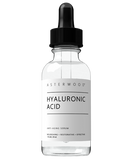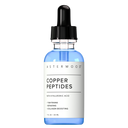
The short answer: Sodium hyaluronate is the salt form of Hyaluronic Acid. They're the same ingredient family, and sodium hyaluronate is what most skincare products actually use. One review found it in more than 95% of Hyaluronic Acid products [1]. If you see "sodium hyaluronate" on your serum's label, you're getting Hyaluronic Acid.
Is Sodium Hyaluronate the Same as Hyaluronic Acid?
Essentially, yes. Sodium hyaluronate is Hyaluronic Acid in its salt form. It's the version most skincare formulas use.
If you bought a Hyaluronic Acid serum and found "sodium hyaluronate" on the ingredient list, you're not alone in double-checking. The names are different because the chemistry is slightly different, but the ingredient family is the same.
Hyaluronic Acid is a polysaccharide, a long chain of sugar molecules, that your body makes on its own. Roughly half of the body's Hyaluronic Acid is found in skin, where it helps keep skin hydrated [2]. Sodium hyaluronate is the sodium salt of Hyaluronic Acid.
What "Salt Form" Means
A salt form is a version of an ingredient paired with sodium or a similar element. For Hyaluronic Acid, it makes the ingredient easier to work with in a formula.
"Salt" here doesn't mean table salt on your face. In chemistry, a salt forms when an acid reacts with a base. Here, sodium takes the place of a hydrogen. Plenty of familiar skincare ingredients come as salts. For Hyaluronic Acid, the salt form is stable and easy to formulate with, which is why it's the industry standard.
Why Most Serums Use Sodium Hyaluronate
It's the form the industry has standardized on. A review of Hyaluronic Acid skincare products found more than 95% contained sodium hyaluronate [1].
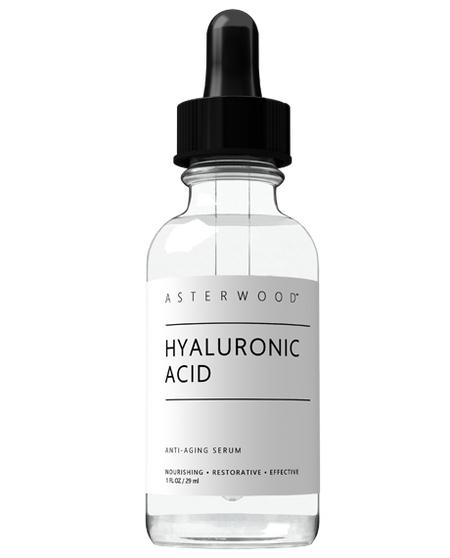
So when a product is marketed as a "Hyaluronic Acid serum," sodium hyaluronate is usually what's inside. That's expected, not a shortcut. Our Hyaluronic Acid Serum's ingredient list includes sodium hyaluronate.
What Molecular Weight Means
Molecular weight is the size of the Hyaluronic Acid molecule. Larger and smaller Hyaluronic Acid behave a little differently on skin.
You'll often see Hyaluronic Acid serums advertise "multiple molecular weights" or "low molecular weight Hyaluronic Acid." Here's what that means:
- High molecular weight (larger) Hyaluronic Acid tends to stay on the skin's surface, where it forms a light, moisture-holding film [1].
- Low molecular weight (smaller) Hyaluronic Acid is associated with hydrating the upper layers of skin [1].
Both help skin hold onto water. They just work at slightly different levels.
The honest limits
Molecular weight is a real difference, but it's easy to over-market, and a smaller molecule isn't automatically better. What matters most for everyday hydration is simpler: a meaningful amount of Hyaluronic Acid, a formula without fragrance or fillers, and consistent daily use.
How Much Water Can Hyaluronic Acid Hold?
A lot. Hyaluronic Acid is often described as binding up to 1,000 times its volume in water [1].
That's why Hyaluronic Acid is called a humectant, an ingredient that draws in and holds onto water. On skin, that shows up as a more hydrated, plumper, smoother look. It's also why Hyaluronic Acid is the foundation of the Asterwood routine. Good skin starts with hydration, and actives tend to go on more comfortably over a hydrated base.
Hyaluronic Acid vs. Glycerin
Both are humectants, meaning they draw in and hold water. They're often used together, and they don't compete.
Glycerin is one of the most common hydrating ingredients in skincare. Like Hyaluronic Acid, it's a humectant. The two feel a little different on skin: glycerin can feel slightly richer, while a pure Hyaluronic Acid serum feels weightless. Many formulas use both. Asterwood's Hyaluronic Acid Moisturizer, for example, pairs 1% Hyaluronic Acid with glycerin.
Does the Form Change Your Results?
For everyday hydration, the form on the label matters less than how much Hyaluronic Acid is in the formula and how consistently you use it.
It's easy to get caught up in the details: acid vs. salt, high vs. low molecular weight. Those differences are real, and they're worth understanding. But for most people, the practical questions are simpler. Is Hyaluronic Acid near the top of the list? Is the formula free of fragrance and fillers? Will you use it every day? Get those right, and you're getting what Hyaluronic Acid is good at.
How to Read a Hyaluronic Acid Label
Look for sodium hyaluronate or Hyaluronic Acid listed early, a short ingredient list, and no fragrance.
A few quick checks:
- Position: ingredients above 1% are listed from most to least, so seeing Hyaluronic Acid near the top is a good sign.
- Length: a short list usually means fewer fillers and fewer potential irritants
- Fragrance: it adds nothing to hydration, so skip it
- Other names: you may also see hydrolyzed hyaluronic acid or sodium acetylated hyaluronate, which are other members of the Hyaluronic Acid family
Is Asterwood's Hyaluronic Acid Vegan?
Yes. Asterwood's Hyaluronic Acid Serum is vegan and cruelty-free.
Shoppers sometimes ask where Hyaluronic Acid comes from, since it can be made from different sources. Asterwood's Hyaluronic Acid Serum contains no animal-derived ingredients, and every Asterwood product is cruelty-free and never tested on animals.
Where You'll Find Hyaluronic Acid at Asterwood
Nearly every Asterwood formula includes sodium hyaluronate, from cleansers to peptide serums to moisturizers.
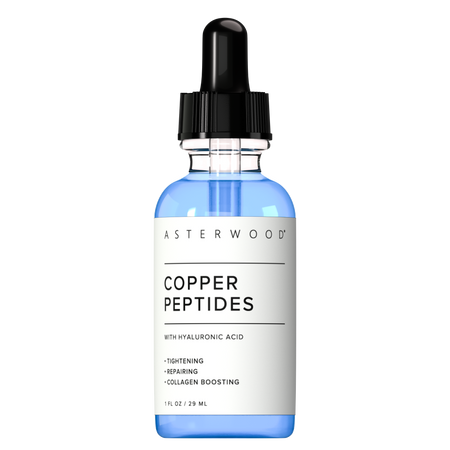
Hyaluronic Acid is the base of the Asterwood routine. You'll find it in the Hyaluronic Acid Serum, the Hyaluronic Acid Moisturizer, the Hyaluronic Acid Eye Serum, the Vitamin C Serum, and the peptide serums. For how Hyaluronic Acid works with peptides specifically, read hyaluronic acid and peptides.
New to Hyaluronic Acid? Start with how to use hyaluronic acid serum, or the complete hyaluronic acid guide. Simple. Clean. Effective.
This article is for educational purposes and does not constitute medical advice. Consult a licensed dermatologist for concerns specific to your skin.