The short answer: No alternative does exactly what retinol does. Retinol has decades of research behind it [2]. But if retinol irritates your skin, there are good options. Bakuchiol is the closest match: it produced similar visible results to retinol in a 12-week head-to-head study, with less scaling and stinging [1]. Peptides take a different route. Argireline targets expression lines, and Matrixyl 3000 and Copper Peptides target the look of firmness. Pick based on your main concern.
Why People Look for a Retinol Alternative
Most people want retinol's results without its irritation. Others want an active they can use in the morning.
If you've tried retinol and ended up red, flaky, and frustrated, you're in good company. Retinoids are known for an early reaction that includes redness, scaling, and stinging [2]. Some people push through. Plenty don't, and that's a reasonable choice.
The other common reasons:
- Sensitive or reactive skin that doesn't tolerate retinoids
- Wanting an anti-aging step that works in a morning routine
- Preferring a simpler routine
First, an Honest Baseline
Retinol is one of the most-researched ingredients in skincare. Any alternative should be judged against that.
Retinoids have a long, deep research record for visible signs of aging [2]. No alternative has that same depth yet. So the useful question isn't "what beats retinol?" It's "what gets me closest to my specific goal, in a way my skin can actually handle?"
Bakuchiol: The Closest Match
Bakuchiol is the alternative with the most direct evidence against retinol. In a head-to-head study, it showed similar visible results to retinol over 12 weeks.
Bakuchiol is a plant-derived compound from the babchi plant. It isn't a retinoid, but it has produced visible results similar to retinol's in clinical studies [3]. In a randomized, double-blind study, it visibly reduced wrinkle surface area and hyperpigmentation by similar amounts to retinol, and the bakuchiol group reported less scaling and stinging [1].
Best for: overall fine lines, texture, and uneven tone, the same broad goals people usually turn to retinol for.
Our Bakuchiol Serum is a short, fragrance-free formula with zero retinol. For the full comparison, read bakuchiol vs. retinol.
Argireline: For Expression Lines
If your main concern is the lines that form when you smile, squint, or frown, Argireline is the targeted choice.
Argireline (acetyl hexapeptide-8) is a peptide, a short chain of amino acids, that helps visibly soften the look of expression lines around the eyes, forehead, and mouth. It works on a different kind of line than retinol does, so it's less a substitute and more a specialist.
Best for: crow's feet, forehead lines, and the "11s" between the brows.
Our Argireline Serum pairs 2% Argireline with 1% Hyaluronic Acid in six ingredients. Learn more in the Argireline guide.
Matrixyl 3000: For Firmness
If your skin is starting to look less firm, Matrixyl 3000 is a peptide pair built for that concern.
Matrixyl 3000 pairs two peptides (palmitoyl tripeptide-1 and palmitoyl tetrapeptide-7) that visibly improve the look of firmness and reduce the look of fine lines and wrinkles.
Best for: the look of firmness and fine lines. Pairs well with Argireline.
Our Matrixyl 3000 + Argireline Serum combines 3% Matrixyl 3000, 2% Argireline, and 1% Hyaluronic Acid. Learn more in the Matrixyl 3000 guide.
Copper Peptides: For Firmness and Texture
Copper peptides (GHK-Cu) are one of skincare's most-researched peptides, used for visibly firmer, smoother-looking skin.
GHK-Cu is a tiny peptide bound to copper. It helps visibly improve the appearance of firmness, elasticity, and texture with consistent use. Its signature blue-green color comes from the copper itself.
Best for: the look of firmness, elasticity, and uneven texture.
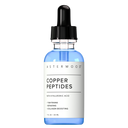
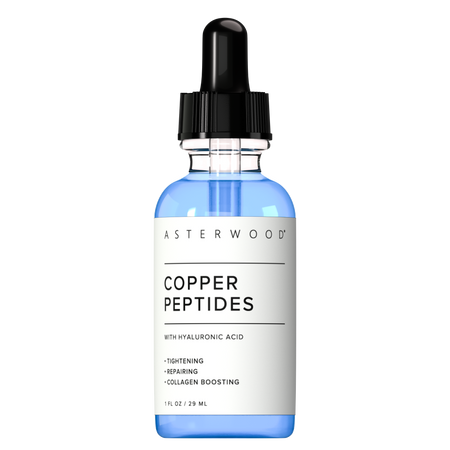
Our Copper Peptides Serum is a 6-ingredient formula with 1.5% Hyaluronic Acid. See the Copper Peptides guide, or read copper peptides vs. retinol.
Which Alternative Fits Your Goal?
Match the ingredient to the concern you care about most.
| Your main concern | Start with | Why |
|---|---|---|
| Fine lines, texture, and tone overall | Bakuchiol | Similar results to retinol in one 12-week study |
| Expression lines (crow's feet, 11s) | Argireline | Made for the look of expression lines |
| Firmness and fine lines | Matrixyl 3000 | Made for the look of firmness |
| Firmness, elasticity, and texture | Copper Peptides | One of the most-researched skincare peptides |
| Sensitive, reactive skin | Bakuchiol | Less scaling and stinging than retinol in the comparison study |
Retinol Alternatives for Sensitive Skin
If your skin is sensitive, start with bakuchiol or a simple peptide serum, introduce one at a time, and keep fragrance out of the routine.
Sensitive skin is one of the most common reasons people look for a retinol alternative, so it gets its own answer. Bakuchiol has the clearest evidence here: in the head-to-head study, it caused less scaling and stinging than retinol while delivering similar visible results [1]. Peptide serums are also generally easygoing on skin.
How you introduce them matters as much as which you pick:
- Patch test on your neck before full-face use
- Add one new active at a time and give it a couple of weeks
- Choose fragrance-free formulas (every Asterwood formula is)
- Apply over a hydrated base and follow with moisturizer
For more, read bakuchiol side effects and sensitive skin.
What "Retinol Alternative" Doesn't Mean
"Retinol alternative" is a marketing phrase, not a regulated term. Check the ingredient list to see what a product actually contains.
The label can be printed on almost anything. Some products called retinol alternatives contain a small amount of retinol or another retinoid alongside other ingredients. Others contain ingredients with little published research. A few quick checks:
- Is the active ingredient named clearly on the label?
- Is there published research on that ingredient?
- Does the ingredient list include retinol, retinal, or retinyl esters if you're trying to avoid retinoids?
- Is the formula fragrance-free if your skin is sensitive?
Can You Combine Them?
Yes. Bakuchiol and peptides fit in the same routine. The simplest approach is to alternate nights.
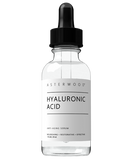
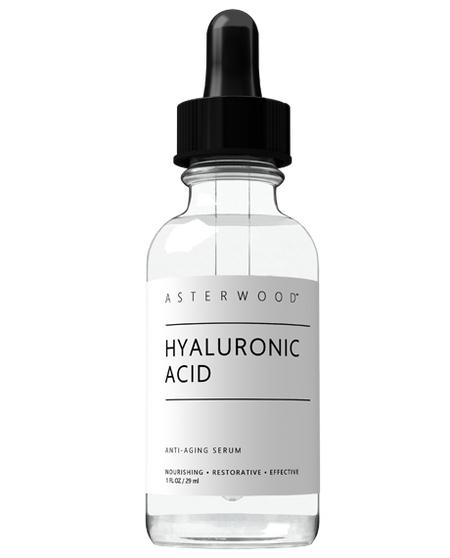
Try peptides one night and bakuchiol the next, or use your peptide serum in the morning and bakuchiol at night. Either way, start with Hyaluronic Acid Serum. Hyaluronic Acid is a polysaccharide that draws in and holds water, and actives tend to go on more comfortably over a hydrated base.
For pairing details, read how to use bakuchiol or peptides vs. retinol.
Coming off a retinol reaction? Let your skin calm down first, then introduce one new active at a time. Our guide to retinol burn and irritation walks through it.
Whatever you choose, give it 8 to 12 weeks of consistent use before judging results.
Results may vary based on consistency, starting skin condition, and other factors.
This article is for educational purposes and does not constitute medical advice. Consult a licensed dermatologist for concerns specific to your skin.
Argireline® is a registered trademark of Lubrizol Advanced Materials (Lipotec). Matrixyl® 3000 is a registered trademark of Sederma.